

Updates on the Leather Naturally Supervisory Council
4 JULY 2025: Leather Naturally is pleased to announce the appointment of Thomas Yu and Arnaud Backbier to its Supervisory Council, with James Lang elected for a final term as Chair.
The Leather Naturally Supervisory Council acts as a governing body, supervising the Management Board, which is responsible for the day-to-day running of the organization. The Council acts in an advisory manner and is composed of five experts from the global leather industry.
 About Arnaud Backbier
Also appointed for a first term on the Council, Arnaud replaces outgoing member Chad Jensen. Arnaud is a strategic business leader with 20+ years’ experience driving growth, innovation, and operational excellence across sectors like life sciences, chemicals, leather and the circular economy. He is skilled in general management, commercial leadership, M&A, and board governance, with a passion for sustainability and building businesses toward long-term success. He has previously held roles at leather chemical manufacturer Royal Smit & Zoon lastly as Global Commercial Director.

About James Lang
Remaining on the Council for a third and final term, James is the Chair of the Leather Naturally Supervisory Council. James is a 6th generation leather manufacturer and a director of Scottish Leather Group Limited. He joined the Group in 1978 and has held a number of senior posts across the group. Working toward retirement, James is now a non-executive director of Scottish Leather Group Limited. He is also Chair of Leather UK, and Chair of the charity Providing for People in Paisley(P3). James serves as a Court Assistant at the Worshipful Company of Leathersellers’ in London.
 About Thomas Yu
Appointed for a first term on the Council, Thomas replaces outgoing member, David Peters. Thomas has over 25 years of experience working in the leather industry and currently holds the position of General Manager of Jollity Enterprise, based in Taiwan. He has also held the position of President of the Taiwan International Leather Association (TILA) since 2021. Thomas previously served as the President of the International Union of Leather Technologists and Chemists Societies (IULTCS).
###
About Leather Naturally
Leather Naturally promotes the use of responsibly made, certified leather. Its website www.leathernaturally.org is a key resource for information about modern leather manufacturing and the part it plays in a more sustainable society.
Media enquiries
For all media enquiries, please contact info@leathernaturally.org

Meet the Maker: Michelle Wong of MW Makes
Michelle Wong is the Founder of MW Makes, a leather goods brand that brings together her background in architecture with a love for traditional craftsmanship.
This year Michelle will be supporting World Leather Day, celebrating the traditional crafts & skills at micro tanneries in Italy and the UK.
“I design each piece with a focus on simple geometries, clean lines, and practical functionality. Using oak or vegetable tanned leather, every item is handmade by me from start to finish, using traditional saddlery techniques like saddle stitching and hand burnishing. The result is a collection of honest, durable goods made to be used, enjoyed, and built to last”.
Based in London, Michelle studied architecture in Manchester and Liverpool before returning to London to work in the field. She currently works as an architect during the week and spends some evenings and weekend time in her studio at Cockpit Arts.
“My training in architecture naturally feeds into my making; it’s shaped the way I think about form, structure, and detail, and those influences are woven through everything I create under MW Makes”.
Whilst working in architectural practice, Michelle found herself missing some of the hands-on processes she loved during her studies—like crafting detailed models or drawing by hand.
“I had a strong urge to create with my own hands again, which led me to explore different craft workshops. Leatherwork really resonated with me. It offered a way to explore design and craftsmanship at a much smaller, more tactile scale. I’ve really enjoyed seeing ideas come to life through this material, and that spark is what inspired me to start MW Makes”.

Michelle loves meeting many of her customers at craft markets and events, which she really enjoys “it’s such a great way to connect, have conversations, and get direct feedback from the people buying my products. I’m often told that my smaller leather goods make perfect gifts, especially for the “hard to buy for” men in people’s lives! While most of my customers are individuals, I also stock a selection of pieces in a few independent shops across the country, which has been a lovely way to reach new audiences”.
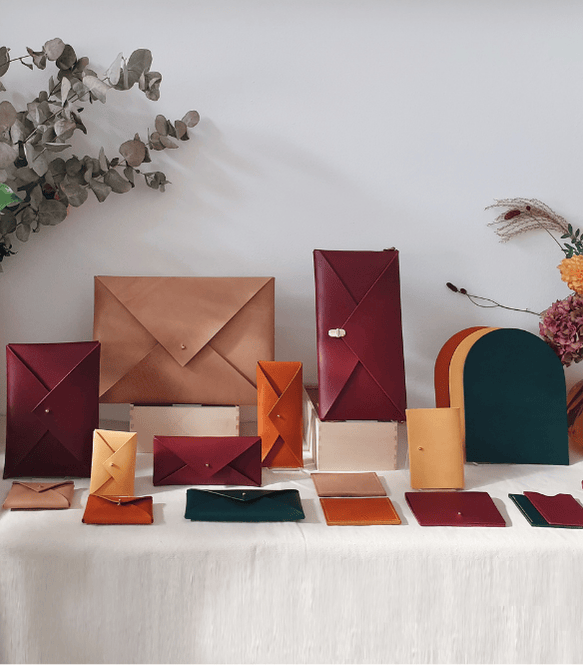
“My leather accessories range tends to be my best seller, especially because they can be personalised, making them perfect as gifts. Among those, my top-selling product is the Long Envelope. It’s a really versatile piece that can be used as a glasses case, a sunglasses case, or even a pencil case. It’s simple, functional design makes it a favourite for many!”
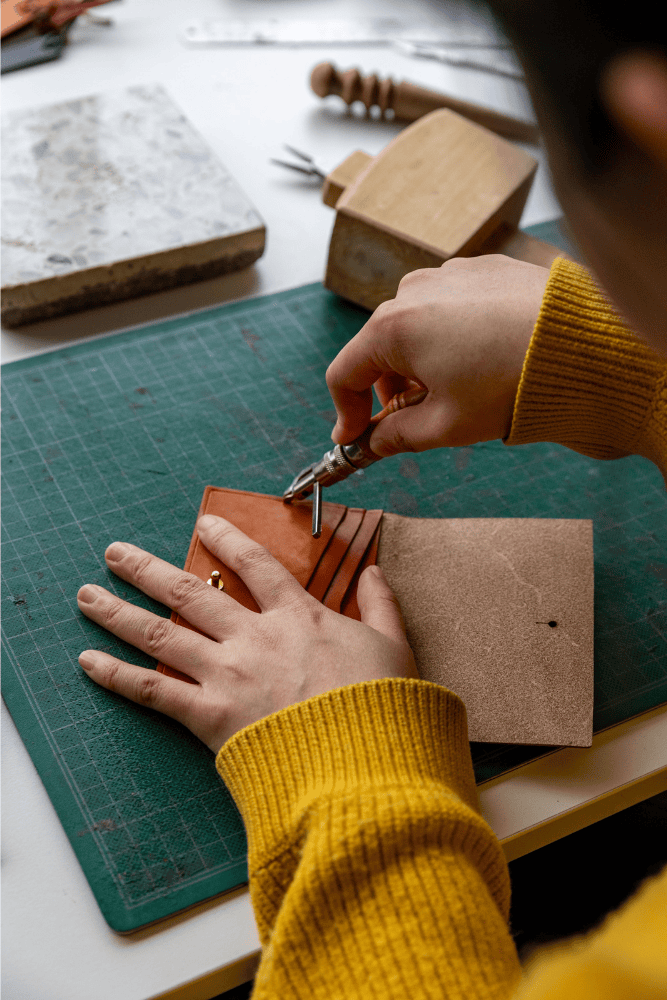
What does Michelle most love about leather? Her passion is based on the way leather changes and evolves over time.
“I’m really drawn to how each piece develops a unique patina, shaped by how it’s used and who it belongs to. It absorbs the oils from our hands, picks up subtle marks along the way, and slowly takes on a character of its own. There’s something really special about creating something that only gets better with age and becomes more personal the longer it’s used.”
Michelle recognises that challenges face the leather industry – many of which come from misconceptions about leather itself.
“One of the biggest is the lack of awareness that most leather is actually a by-product of the meat industry—something that often gets overlooked in wider conversations about sustainability. I believe better access to information and more transparency around sourcing and production would really help shift perspectives. When used thoughtfully and responsibly, leather can be a long-lasting, natural material that honours the resources we already have.”
For the year ahead, Michelle is planning a few exciting new directions – expanding her wholesale outreach to work with more independent shops and galleries, and also looking to offer more workshops—both in her Deptford studio and through partnerships with larger venues—so more people can experience leathercraft for themselves.
“Last year, I had the opportunity to train with José Luis Bazán in Spain, which was an incredible experience. Since then, I’ve been refining those skills behind the scenes and developing a new range that explores the intersection of leatherwork and interiors—something I’m really excited to share soon.”
And finally, Michelle draws inspiration from many other leatherworkers – particularly those who are pushing the boundaries of how leather is used.
“I’m lucky to be part of the incredible community at Cockpit Studios, where I’m surrounded by talented makers like Lucy Welton, Laura Amstein, Jessie White, Harry Owen, Joost Pasman, Yusuf Osman, Jasmine Carey, Maria Mclean and Jesse Noy. We all support one another, and I find their innovative approaches to leatherwork both inspiring and motivating.”
As part of Michelle’s support for World Leather Day, Michelle will be sharing stories across her Instagram feed – celebrating the craft and beauty in real leather making. She also wants to use the opportunity to challenge the term ‘vegan leather’.
“It’s often used to describe materials that aren’t actually leather, but many of these alternatives are made from oil-based materials like plastic. Consumers often assume “vegan leather” is a sustainable option without fully understanding what the material is or how it’s made”
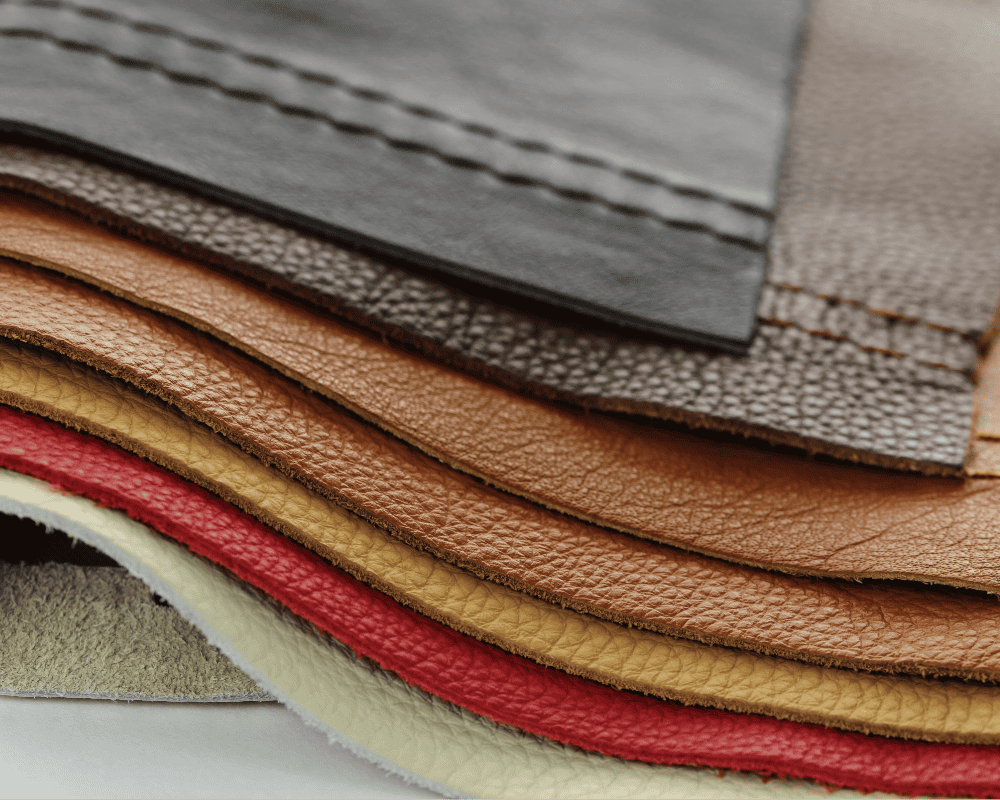
Why We’re Going Beneath The Surface
For this year’s World Leather Day, we want to create a conversation. An opportunity to challenge misperceptions about the way leather is made and its role in a planet positive environment.
Too many people are confused about leather, how it’s sourced, made and its impact on the health of our planet.
And perhaps that’s because of myths and half-truths shared and re-shared across multiple social and media platforms.
As an organization representing the leather industry, we have a responsibility to counter the myths, share the truth and present the facts about leather with transparency and data.
‘Beneath The Surface’ is our prevailing theme for 2025. A way to encourage consideration about the truths beyond a surface understanding. Our conversation is about leather, its provenance and its impact on our world.
For 2025, we are focusing on 3 fundamental pillars:
1. Transparency
Transparent and compliant leather production relies on audited tanneries that process animal hides using strictly regulated chemicals.
- These facilities also adhere to rigorous hygiene and environmental standards.
- As a result, final leather products meet brand and NGO requirements by complying with Restricted Substances Lists (RSLs).
Our mini website ‘Leather Truthfully’ is a useful resource for everyone seeking transparency about leather. Despite being launched over 2 years ago, it is still well visited and loved for its design and accessibility.
Whether you want to know the answers to basic questions such as “are cows killed for leather (they are not)” or “what is vegan leather” – we endeavour to share all the answers.

2. Sustainability
Modern leather production prioritizes sustainability, with many tanneries certified by organizations like the Leather Working Group and the Sustainable Leather Foundation.
- These certifications ensure adherence to strict environmental standards, including responsible water and energy use, waste management, and chemical control.
- Additionally, many tanneries and leather industry organizations are conducting Life Cycle Assessments (LCA) to evaluate and reduce leather’s environmental impact from raw material to finished product.
Leather and sustainability – according to the Higg Index
The Higg Materials Sustainability Index (MSI) is a tool that assesses the environmental impacts of materials used in the apparel and consumer goods industries, helping designers and developers make more sustainable choices during product development by providing a dataset to evaluate material impacts.
In 2024, we published a new and important set of data included in the October 2024 update of the Higg MSI. It confirmed the environmental impacts of bovine leather were over 60% lower than the previous MSI value for leather.
What’s more, the Global Warming Potential, which previously showed the impact of leather at 36.8 points on the Higg MSI scale, has also been re-calculated and reduced by 60% to 14.6 points. This significant shift advances real change, promoting a more nuanced and honest understanding of bovine leather as a sustainable material choice.
This transparent insight was conducted by SPIN 360, utilizing data collected from 45 manufacturing facilities across 18 countries and evaluated 92 leather products with the intention of providing a global representation of bovine leather. It encompassed key leather end-use sectors, including footwear, automotive, leather goods, and upholstery.
3. Longevity
Leather has unique properties that make it a long-lasting material.
Leather’s exceptional durability allows it to be repaired, reused, and repurposed, making it a long-lasting material. Its unique combination of strength, breathability, and comfort sets it apart from synthetic alternatives. These qualities make leather a naturally resilient and sustainable choice.
In 2024, we published the Leather Repair Directory. It was an opportunity to celebrate the longevity of leather, leather repair experts worldwide and their services. From a vintage leather jacket, a well-loved pair of leather shoes, or a luxury leather handbag, the Leather Repair Directory helps connect consumers with the right repair professional nearby.
As an organization, we encourage consumers to understand the facts about leather by going deeper, exploring more about leather materials and being open to truths.
If you love leather, or even if you don’t, we think knowing how leather is made and its true impact on the planet, helps consumers make the best purchase decisions.
Global Leather Trends Review 2025
APLF 2025, the leading leather trade show in Hong Kong has wrapped for another year!
Sustainability, environmental impact and regulation were key themes this year and gave us the opportunity to share the data behind these headlines.
We were delighted to share a stage with Leather Working Group enabling us to unpack the important implications of our Guide to LCAs, the revision of the Higg MSI and what it means for leather and positive planet health.
We asked leather craftsman Yusuf Osman (also known as @Yussico on Instagram!), to summarise some of the key themes from APLF 2025.
World Leather Day 2025: Beyond The Surface
World Leather Day: 26th April 2025
Leather Naturally is pleased to announce that this year’s World Leather Day will take place on Saturday 26th April 2025. The theme for this year’s celebration will be: “Beyond The Surface”, designed to promote a deeper look at leather as a material and challenge misconceptions.
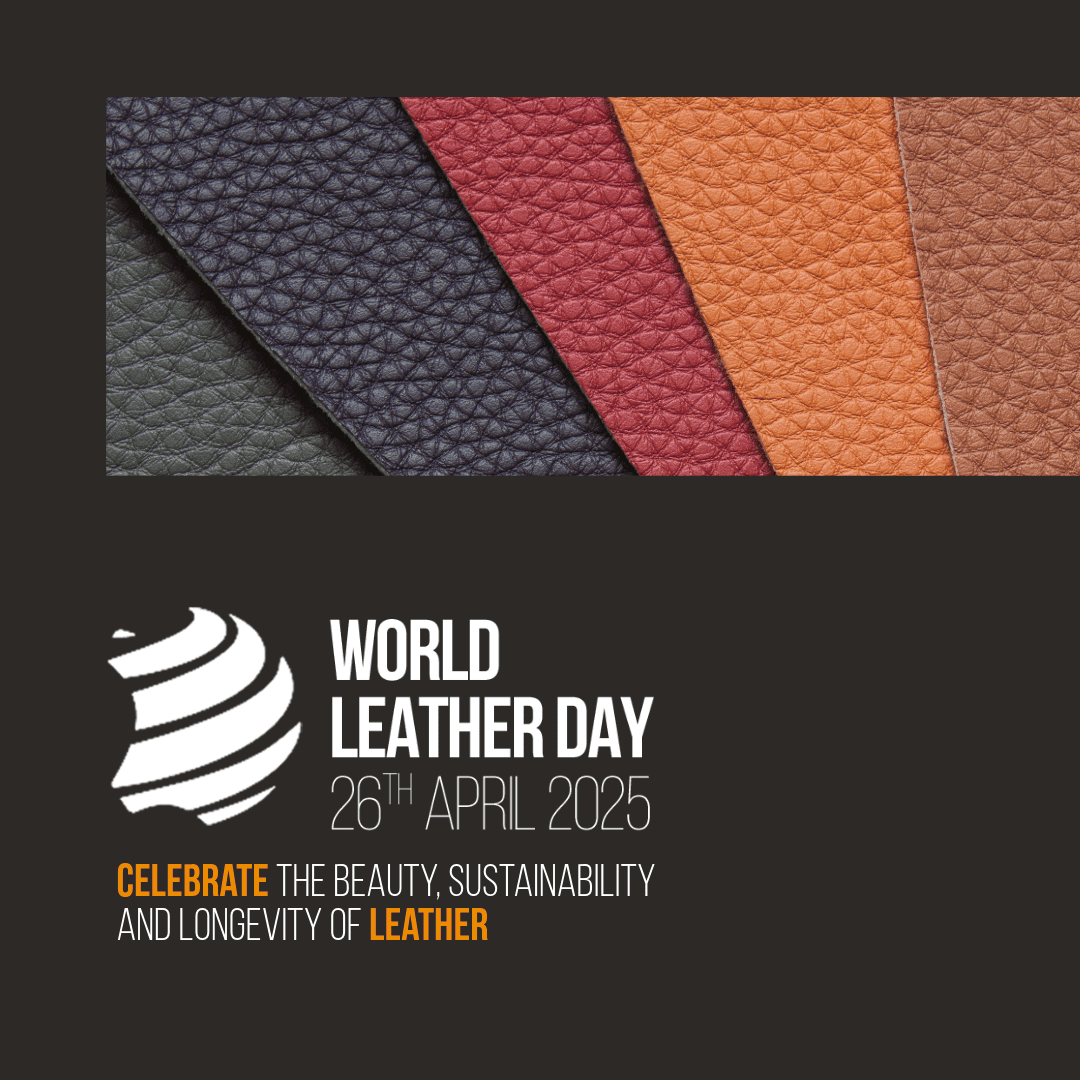
About World Leather Day
Launched for the first time in 2022, World Leather Day is a global movement dedicated to celebrating leather as a material and promoting a deeper understanding of the leather industry. World Leather Day is spearheaded by Leather Naturally and recognised by leather manufacturers, traders, chemical companies, brands and retailers, leather workers and craftsmen, and many more organisations and individuals across the world!
Beyond the Surface
This year, Leather Naturally aims to promote a deeper look at leather as a material and challenge prejudices and superficial judgments. The “Beyond the Surface” campaign will be focused on three key pillars:
- Transparency: Transparent and compliant leather production relies on audited tanneries that process animal hides using strictly regulated chemicals. These facilities also adhere to rigorous hygiene and environmental standards. As a result, final leather products meet brand and NGO requirements by complying with Restricted Substances Lists (RSLs).
- Sustainability: Modern leather production prioritizes sustainability, with many tanneries certified by organisations like Leather Working Group and the Sustainable Leather Foundation. These certifications ensure adherence to strict environmental standards, including responsible water and energy use, waste management, and chemical control. Additionally, many tanneries and leather industry organisations are conducting Life Cycle Assessments (LCA) to evaluate and reduce leather’s environmental impact from raw material to finished product.
- Longevity: Leather has unique physical and chemical properties that make it a long-lasting material. Leather’s exceptional durability allows it to be repaired, reused, and repurposed, making it a long-lasting material. Its unique combination of strength, breathability, and comfort sets it apart from synthetic alternatives. These qualities make leather a naturally resilient and sustainable choice.
Want to take part?
If you want to help us celebrate World Leather Day this year, we encourage you to consider creating and publishing your own content (such as blogs, social media posts, and videos) to celebrate leather and focus on the “Beyond the Surface” campaign (key points outlined above.)
To get started, you can download the World Leather Day 2025 social media kit here! The kit includes the WLD2025 logo, suggested posts and messaging, and images to use on your social media accounts.
Make sure to sign up to our mailing list to receive all updates about World Leather Day 2025.
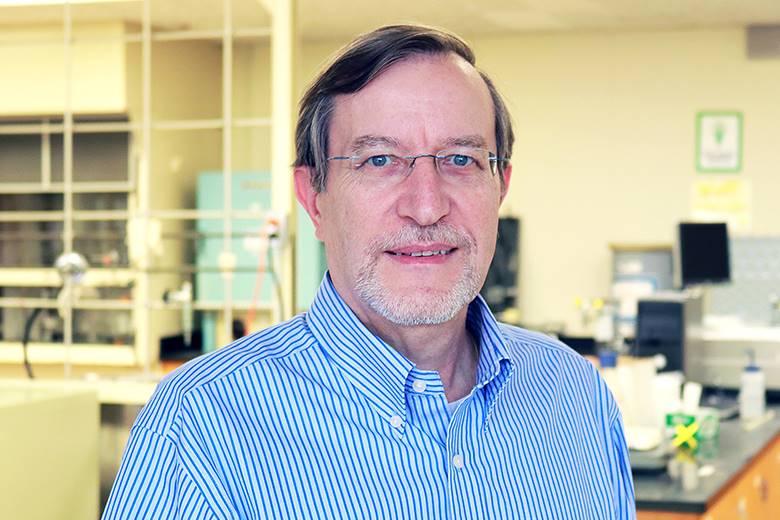
Open Letter from Dr. Luis Zugno, Management Board Chair
In 2025, I became Chairman of Leather Naturally. I have been on the Board for 4 years and feel proud and excited to begin this new chapter.
There have been so many milestone achievements since Leather Naturally’s inception in 2013, and we have more plans for the year ahead.
But before I run too far into the future, I want to reflect. Why was Leather Naturally first created and how have things evolved?
Our history starts with our founder Dr. Mike Redwood, who had a vision to create Leather Naturally for the education and promotion of compliant and regulated leather manufacturing.
He recognized that an organization curated by the leather industry and driven by leather experts working collectively together could support the industry better, helping to improve best practice, insights, education and inspiration.
Now, 12 years later, his vision is living, and Leather Naturally has grown to be recognized as the number one source for education and promotion for the leather industry
We have grown our membership significantly and now offer the best educational website in the industry and the best educational materials that the industry has ever had. We are a highly trusted source of information.
Leather Naturally has evolved from media promotion fact sheets and now we have strong resources for communicating a scientific approach through our close relationship with IULTCS.
On-going partnership is essential to our endeavors, and we are grateful to our enduring working relationships with Leather Working Group, Spin360 and Leather UK.
Our recent publications about LCAs are important milestones for the leather industry and could not have been achieved without the work of Leather Naturally.
Over time, we have been able to move from confusing and often misguided perceptions to scientific proven data, supporting the sustainability of leather and its role in a circular economy.
Some of our key achievements over the last few months have included:
- A peer reviewed paper on LCAs published in ‘Discover Sustainability’ magazine, encouraging academics and scientists to re-think leather.
- A joint submission to the Higg Index with the Leather Working Group. Its analysis significantly reduced data around leather’s environmental impact.
- A new well designed and accessible Guide to LCAs, available on our website.
Leather Naturally exists because of the members who support us financially.This membership support pays for regular educational consumer campaigns, on-going social media content, thought leadership articles and design support to ensure our website is highly visible, with content that is well used. And of course, it pays for all the necessary administrative tasks involved in a well run membership organization.
All other aspects of work are voluntary: the management board, supervisory council and team members. The management board and their teams carry out what I call the inspiration and perspiration of the organization.
We are very proud of their work and I want to thank them for their time, effort, energy and support alongside our entire membership who have supported Leather Naturally for over 12 years.
I also want to thank our industry and media partners who share our work, campaigns and manifestos. I look forward to working with all of you this year again.
In 2025 we will continue to support our members with communication activities, and we are working to expand our activities in Asia and the Americas. As we move forward, we will also confront some of the biggest challenges in our industry:
- The source of hides and skins. Today there is still a belief that animals are killed to make leather
- Leather processing still uses high amounts of chemicals, water and energy. This has enormous implications for the measured and audited parameters
- Leathers need compostability to meet the end-of-life disposal
So, here is my call to action:
We need the continuous support of our existing members, both financially and through participation too. We also need new members to join Leather Naturally and help us address the upcoming and evolving challenges that face us all. We need new ideas on how to disseminate our information to a wider audience.
You need to choose your partner for the future challenges of the leather industry. Choose Leather Naturally!
Find out more about our range of memberships here https://www.leathernaturally.org/about-us/join/

A Proud & Significant Story of Sustainability: Nicholas Muirhead
A Proud & Significant Story of Sustainability: Interview with Nicholas Muirhead
Nicholas Muirhead is CEO of Scottish Leather Group. He has been working within the family business for over 18 years and even earlier as a boy, he was helping out, absorbing the depths of knowledge from the professional experts in the firm.
“The learning journey was brilliant,” says Nicholas. “It was a great testbed for what I am doing now. I learned from some incredibly knowledgeable people that I knew from a young age as well as learning directly from my father and taking on his business ethos ‘How can we better tomorrow than we are today’”
However, it wasn’t always Nicholas’ clear cut intention to join the family business. He studied chemical engineering at University – a way to keep his options open. But when he graduated, Scottish Leather Group was in the process of developing a new thermal energy plant – which was an exciting innovation opportunity. He joined the team as a Project Engineer in 2007.
From the very first founders opening a Tannery in Glasgow in 1658, to the eight generations of family tanners and leather makers, the group of businesses now within Scottish Leather Group, have always been firmly rooted in Scottish heritage.
With 750 employees, Scottish Leather Group today is a group of 3 distinct brands with shared values across sustainability, high quality and innovation.
Muirhead was established in 1840 and is proud to be a market leader for the global aviation industry. With a focus on low carbon, high performance leather, you’ll find Muirhead leather on 160 airliners, buses, coaches, and railways, and in the marine and furniture industries as well as leading restaurants and government buildings, hotels and private commissions.
Founded by Arthur Muirhead in 1905, Bridge of Weir leather has helped shape the course of automotive history. Synonymous with comfort and timeless quality, Bridge of Weir leathers have been defining car interiors in terms of sporting performance and luxurious quality. From the Ford Model T to the DeLorean DMC-12, Aston Martin V8 Vantage to the McLaren F1.
Lang offers over 150 years of tanning experience producing the finest Scottish leathers and a tannery in Scotland known for the quality of its leather.
Over 98% of raw hides are sourced from the UK and Ireland. Scottish water is recycled and reused and over 50% of tanning production is organic.
With a transparent zero waste strategy and the world’s lowest carbon leather, producing game changing products, Scottish Leather is clearly at the forefront of sustainability within the global leather industry.
It’s an impressive approach but it doesn’t come without challenges.
“The commercial reality is that it’s expensive to manufacture leather sustainably. And we don’t make commodity leathers because we know the benefits of natural, long lasting, premium leather ” explains Nicholas. “We are proud to have customers in the US and UK who value sustainability and natural leather. But it is a journey of customer education”.
Notwithstanding, the business recognises an opportunity in providing a wider comprehensive approach to leather.
“Looking beyond leather in the sense of the complete application of leather is a clear vision for us. For example, we have a great sewn cover operation in China. This offer is a one stop show from design to producing sustainable leather, simplifying the journey for the customer and creating a much easier customer experience”
But perhaps it is Scottish Leather’s unrivalled approach to protecting the environment that places it beyond comparison. In 2024 the business celebrated 21 years of recording and sharing their ESG impact.
“It’s about doing the right thing” says Nicholas. “We know that our approach to sustainability is pioneering but it’s not yet seen as a necessity. We believe it will become one and we’ve put in the work to lead the world in this way forward”.
The business is now 90% of the way towards achieving its target to eliminate greenhouse gas emissions across Scope 1 and 2 of the standardised Greenhouse Gas (GHG) Protocol this year.
The group’s new £14 million Super Tannery has slashed energy use by 82% and water consumption by 42%, advancing its low-impact leather production goals.
“We are extremely proud of the progress we have made over the past two decades. Environmental sustainability sits at the very core of all decisions that are taken across our businesses and as a result of this we are industry leaders in providing an unprecedented range of solutions to the many and complex challenges that our customers face today”.
With exciting new innovations to be unveiled this year, the future for Scottish Leather Group is bright. As Nicholas explains:
“From exceptional supply chain traceability to new tanning technologies, we’re not just delivering environmental innovation for our customers but also confidence. Confidence that no other leather manufacturer is doing more to continually innovate and invest in order to stay ahead within the rapidly evolving regulatory sectors in which we operate.
All of this is only made possible through powerful and positive collaborations with our people, our suppliers and our customers which in turn underlines our central belief that together we go further.”
For more information about Scottish Leather Group’s sustainability and its 2024 ESG Report https://www.scottishleathergroup.com/planet

All about LCAs: How to Assess the Environmental Impact of Leather
Leather Naturally launched an essential new resource for the leather industry: the Guide to Life Cycle Assessment (LCA) in the Leather Industry.
This guide has been developed to provide fundamental knowledge to all stakeholders in the sector on how to conduct, interpret and collaborate on LCA studies. In addition, the guide has been written in intuitive and simplified language, making LCAs accessible to all audiences. It also has a number of visual features that make it easy to understand and apply to the routine of those interested.

What is a Life Cycle Assessment (LCA)?
An LCA is a method for analyzing and understanding the environmental impact of a product across its whole life cycle, from origin, processing, usage, and disposal. In the context of leather production, an LCA might consider factors like cattle farming, tanning, manufacturing, product use, and end-of-life disposal.
What is in the guide?
Leather Naturally’s new guide outlines:
- The importance of LCAs: How they help companies make more sustainable decisions about materials, processes, technologies and suppliers.
- Methodologies and approaches: Different ways of conducting an LCA, their advantages and challenges.
- Data sources: How to collect and use primary and secondary data for a more accurate assessment.
- Results and applications: How to interpret the results of an LCA and apply them to business strategies.
- Challenges and limitations: Critical issues for companies wishing to conduct their own studies.
- Findings from Leather Naturally’s aggregated LCA study: A detailed analysis of the data collected and the sector’s contribution to Higg, in partnership with the Leather Working Group and SPIN 360.
With this material, stakeholders in the leather sector will have more information to make informed decisions and improve their sustainability practices.
Is Leather Sustainable? A Scientific Look at Its Impact
Leather Naturally and SPIN 360 have published a paper in the Discover Sustainability journal, titled: “A global study on the Life Cycle Assessment (LCA) of the modern cow leather industry.”
The study aggregated data from 56 LCAs across 11 countries, including several different types of leather and industrial segments, including automotive industry, footwear, and upholstery. The work was conducted by Italian consultancy SPIN 360.
Key findings
- Farming has a major impact: The study revealed that the upstream (farming) stage significantly contributes to five of the six impact categories (such as global warming potential and water use), highlighting the need for better farming practices and more accurate datasets on animal farming.
- Updating our understanding of leather’s impacts: The study highlights the need to constantly seek for updated results when making decisions on environmental impact assessments, since outdated and updated values can differ a lot.
- Benchmarking for further studies: These findings provide a new benchmark for future LCAs and highlights areas where process improvements can enhance sustainability in the leather industry.
###
About Leather Naturally
Leather Naturally is a membership organization for the leather industry focused on promoting the use of certified, responsibly made leather. Leather Naturally provides expert information on leather as a material to consumers, designers, and brands. Find out more: https://jimd45.sg-host.com/
About SPIN 360
SPIN 360 is a Milan-based consulting firm that specializes in the development of new sustainable business models and technologically and organisationally innovative solutions. It supports companies in defining and implementing a multi-year sustainability and compliance strategy. Find out more: https://spin360.biz/

Kerry Senior elected to Leather Naturally Management Board
Hoofddorp, NETHERLANDS; 18 December 2024: Leather Naturally, a member association for the leather industry, is pleased to announce the appointment of Dr. Kerry Senior, Director of Leather UK, to its Management Board with immediate effect.
Dr Kerry Senior was appointed Director of Leather UK in 2013. His role includes the secretariats of the Leather Producers’ Association, the Dr Dorothy Jordan Lloyd Memorial Trust, and the British Industry Development Trust. In 2019, he became secretary of the International Council of Tanners.
As part of a new strategy, Kerry was responsible for developing the PR programme for Leather UK, challenging misconceptions about and promoting the sustainability of leather. Significant successes include the survey of UK consumer attitudes and understanding of leather, delivered with Leather Naturally and the Institute for Creative Leather Technology.
Kerry’s previous work experience includes nine years with BLC Leather Technology Centre, working on UK & EU funded research projects addressing environmental and raw material issues facing the leather industry, and dealing with technical and policy aspects of environmental Legislation. His PhD in Microbiology was awarded by the University of Kent at Canterbury.
After a vote by members of Leather Naturally in early December 2024, Kerry was confirmed as the newest member of the Leather Naturally Management Board. He replaces the position left by departing Board member Debbie Burton, Director of Communications at Leather Working Group.
On this appointment, Chair of the Leather Naturally Management Board Dr. Luis Zugno said:
“We are delighted to welcome Kerry to the Leather Naturally Management Board. Kerry’s extensive knowledge and experience in the leather industry will be invaluable as we continue to advance our organization’s goals and increase our collaborative work with other organizations.”
About Leather Naturally
Leather Naturally promotes the use of responsibly made, certified leather. Its website www.leathernaturally.org is a key resource for information about modern leather manufacturing and the part it plays in a more sustainable society.
Media Enquiries
For all media enquiries, please contact info@leathernaturally.org