


Which leather type falls under which price category?
Leather grades: A price guide to leather grades
Leather pricing can vary widely based on factors like quality, source, and processing. Here’s a general ranking from the most expensive to the least expensive types of leather:
- Full-Grain Leather: Full-grain leather is known for its superior quality and natural grain. It’s often used in high-end products like luxury bags, premium footwear, and high-quality furniture.
- Top-Grain Leather: Top-grain leather is slightly less expensive than full-grain but still of good quality. It’s commonly found in designer goods and high-end furniture.
- Nubuck Leather: Nubuck is top-grain leather that has been sanded to create a soft, velvety surface. It’s commonly used in upscale shoes, jackets, and accessories.
- Aniline Leather: Aniline leather is full-grain leather that’s dyed with soluble dyes, allowing the natural grain to show through. It’s often found in luxury furniture and high-end car interiors.
- Semi-Aniline Leather: Semi-aniline leather is slightly more affordable than aniline leather and features a light protective coating. It’s used in a wide range of products, from premium furniture to designer handbags.
- Pigmented Leather: Pigmented leather is top-grain leather with a polymer finish, making it more affordable. It’s commonly used in mid-range furniture and automotive upholstery.
- Split Leather: Split leather, which comes from the inner layers of the hide, is less expensive due to its lower quality and durability. It’s often used in more affordable furniture, garments, and accessories.
- Bonded Leather: Bonded leather is one of the least expensive options and is made from leather scraps and fibers combined with synthetic materials. It’s commonly found in budget furniture and low-cost goods.
- Faux Leather (Synthetic Leather): Faux leather, also known as synthetic leather or vegan leather, is made entirely from synthetic materials and is usually the most affordable option. It’s often used in budget-friendly fashion items, upholstery, and accessories.
Furthermore, feel free to check out the video created by our partner, Yusuf. It provides valuable insights to help you differentiate between various types of leather
However, keep in mind that within each category, there can still be variations in quality and price depending on factors like brand, craftsmanship, and specific processing techniques. The type of leather you choose should align with your needs, budget, and preferences.
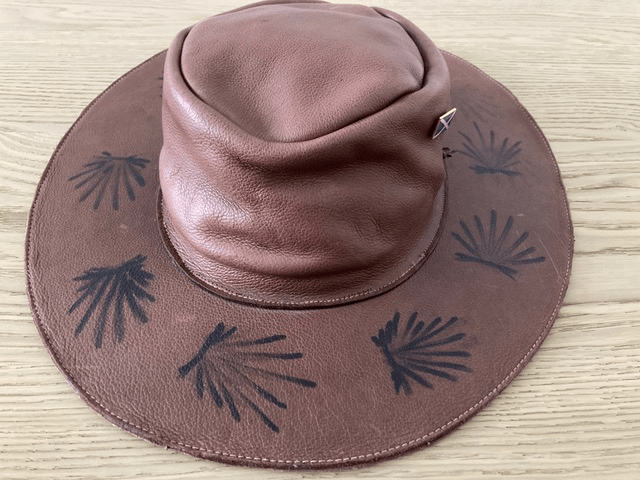
Why the leather hat is so special to Frans?
LN: we are curious to your story about the leather hat. How did you got this hat.
I got this hat as a present from my good friend Joost, who unfortunately died a few years ago. He made this hat by himself approx. 8 years ago with leather I supplied him with and he liked very much. He was an exquisite leather technician who worked, both in the tannery as well as in the supply chain for many years. After his retirement he started with two hobbies: making leather hats for friends and tanning fish leather on a bigger scale. First in his garage with the aid of an old washing machine, later he advised a bigger company in the North of the Netherlands to produce fish skins on production scale.
LN: Tell us about your pilgrimage to Santiago the Compostella together with your hat.
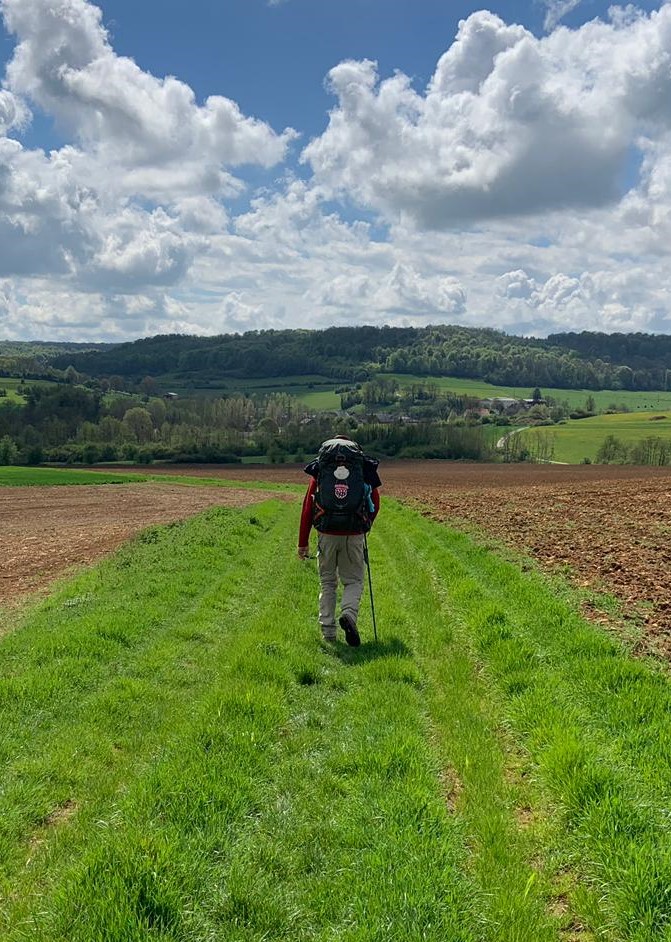
The leather hat I made water resistant with some products from Stahl, the company I worked for many, many years to prevent it from getting wet, hence heavy. If you go on a long trip you do not want to carry 10 grams too much and also I decorated it myself with scallops. During the 700-kilometre trek to Vezelay (F), my trusty leather hat was invaluable. It protected me from the unpredictable weather changes, shielding me from the relentless rain that fell suddenly and the relentless sun that beat down on me during the day. As I traversed the ancient path, the hat became a symbol of both the practicality and intention behind my pilgrimage.
LN: Why did you decorated the hat with scallops?
Scallops are the symbol of the road to Santiago de Compostela, you will find them all over Europe to guide the way. Every pilgrim to Santiago will have a scallop on his backpack, so you are able to identify a fellow walker immediately. This will also lead to very interesting meetings along the way.
LN: What does this hat mean to you?
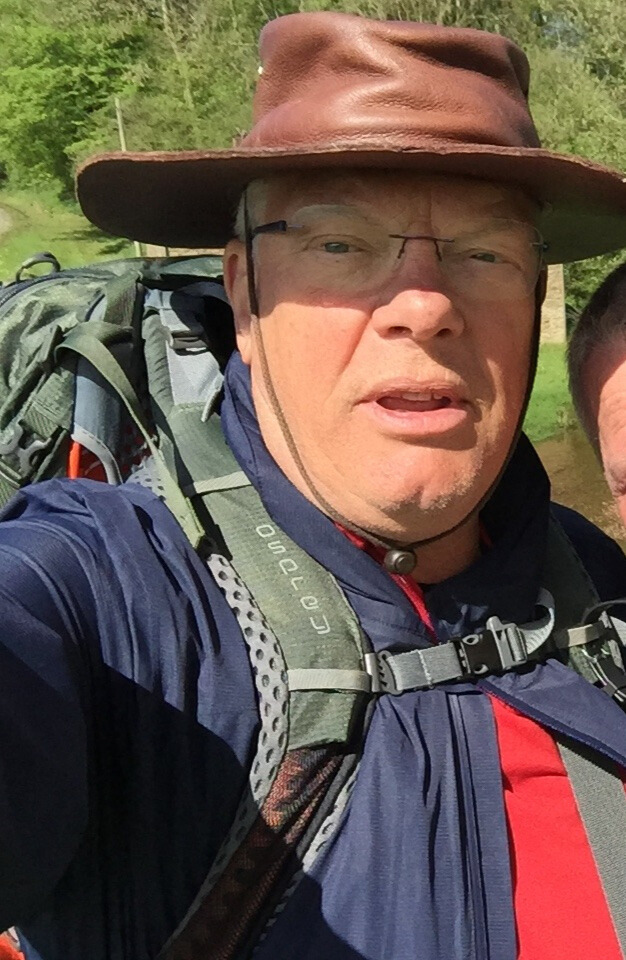
The hat is more than an accessory; it is a tangible connection to my good friend Joost and was my travelling companion during this extraordinary experience. As the seasons changed and life went on, the hat remained a treasured relic of my pilgrimage, to Santiago de Compostela.
LN: Where is the hat now?
The hat is hanging in my “man cave” and got a nice place between a lot of other symbols of my life, mostly presents which I assembled during my interesting life in the beautiful world of making leather.
LN: Thank you for sharing your personal story Frans.
Read more personal stories by clicking on the link: ………………
If you as reader also have a nice personal story and like to share this with us, please contact by e-mail at: info@leathernaturally.org
Fast fashion is out of fashion – how leather is set to become part of the solution
Leather: Pioneering Sustainability and Circular Fashion in the Age of Climate Action
As the world grapples with how we can reduce our impact on the environment and actively limit the impacts of climate change, we sit at a vital crossroads in our collective history. Leather is well positioned to be a meaningful part of the solution.
The European Commission has launched an anti-fast fashion campaign specifically designed to educate younger consumers about the negative impacts of fast fashion and to promote the EU Strategy for Sustainable and Circular Textiles. The campaign aims to address issues of over-production associated with fast fashion and to prioritize sustainability and longevity.
The European Union is committed to serious action as part of its 2030 Vision for Textiles the cornerstone of which is sustainable fashion – designed to have a positive impact on people and the planet. Read here for more details.
With leather’s inherent properties of durability, reparability and longevity it represents the antithesis of fast fashion. The fact that it utilizes a by-product in order to create a versatile and premium material lends an additional benefit to its key position in the circular economy.
Increasing traceability expectations together with more and more stringent regulations have entirely shifted the modern consumer landscape. Consumers are far more educated than ever before on the provenance of the goods they purchase and the fact that the impacts of their purchasing decisions can be far-reaching.
Within this context, leather takes a by-product that would otherwise need to be disposed of (with its own environmental impacts) and using responsible, traceable and verifiable production processes, offers designers and consumers high quality products that can be repaired, re-cycled and that can last a lifetime.
How can you make an impact?
In addition to industry and government initiatives and regulations being pursued on a global scale, consumers also play an important role in effecting positive change by choosing leather. Please see below for some ideas as to how you can have an impact –
1. Quality over quantity
Invest in high-quality leather products that are durable and timeless, meaning that you can buy fewer items that last longer. Take care to purchase authentic leather pieces rather than synthetic or vegan leather alternatives which can contain high percentages of plastic, petroleum based products etc…which are damaging to the environment and do not have the same durability as leather.
2. Repair and restoration:
Leather products can often be repaired or upcycled and major brands are actively encouraging their consumers to repair their leather products. Many luxury leather brands such as Hermes, Chanel and Loewe offer to repair your leather products with the intent of extending their life and consequently reducing consumption and waste. Some of these services include in-store artisans and even dedicated retail spaces which create an experience for the consumer and build brand value at the same time.
3. Vintage & second hand:
Given the longevity of leather items, there is a strong vintage or second-hand market for leather products which – similarly to above – reduces global consumption and waste and can offer you a point of difference in terms of style and luxury at the same time.
4. Circular economy:
By choosing leather, you can actively support a circular economy in a number of ways. Firstly, by using a by-product of the meat industry, leather avoids hides and skins being sent to landfill and instead uses them to create beautiful and versatile products. In addition to this, you can take advantage of brands that may offer to buy back leather goods for a credit towards a new purchase eg… Mulberry’s circular Exchange program. Repairing your leather products and buying vintage leathergoods are also examples of how you can encourage a circular economy.
5. Timeless design:
Authentic leather products are often designed to be classic and timeless to encourage you to invest in pieces that you can wear for many years rather than to buy into fast fashion. You can also use apps such as Whering which can help you to digitize, curate and style outfits from your own wardrobe as well as fill wardrobe gaps sustainably!
6. Care:
Educate yourself about the quality and origins of what you are buying so that you can make informed choices about purchasing leather products. This will ensure you can keep them for many years and also take care of them well. For more tips on how to best care for your leather items please click here


Biobased carbon
What is biobased content?
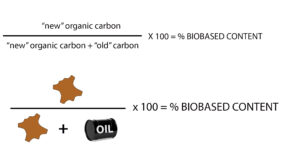
It is a measure of “new” carbon or recent organic carbon compared to the amount of “old” carbon. New carbon originates from renewable biological sources (such as plants, animals, forests, marine, feedstocks, etc.) and old carbon is predominantly from petroleum-based products.
For example, oil extracted from a plant is 100% biobased and oil derived from petroleum fractioning is 0% biobased. They can have the same chemical composition, but one is from a renewable source the other not.
How is biobased content calculated?
In the diagram below, the biobased content refers to the hide and not the final leather end product:
What is the significance of biobased content?
The higher the amount of biobased content the higher the amount of renewable carbon. The production of renewable carbon is made by the capture of carbon from the atmosphere, in practical terms cleaning the air.
Are biobased products more biodegradable? The terms Biobased and Biodegradability are not interchangeable. There is no correlation between the two.
How much biobased content does leather have?
Animal skins have 100% renewable carbon. The transformation of skins to leather is made with some petroleum-based products. This reduces the amount of biobased content in the leather, but most leathers still have more than 80% biobased content.
Having 80% biobased content is generally considered good in terms of sustainability and environmental impact. A higher biobased content indicates that the product or material relies more on renewable resources, which can help reduce the overall carbon footprint and dependence on non-renewable fossil fuels. Products with high biobased content are often seen as more environmentally friendly and can contribute to mitigating climate change and promoting sustainable practices.
How is biobased content measured?
The most widely used test methods are ASTM D6866 (USA) and EN 16785-1 (Europe).
Literature:
USDA has an extensive list of biobased products in the Biopreferred Program
Biobased content on leather and alternative materials can be found in this Publication
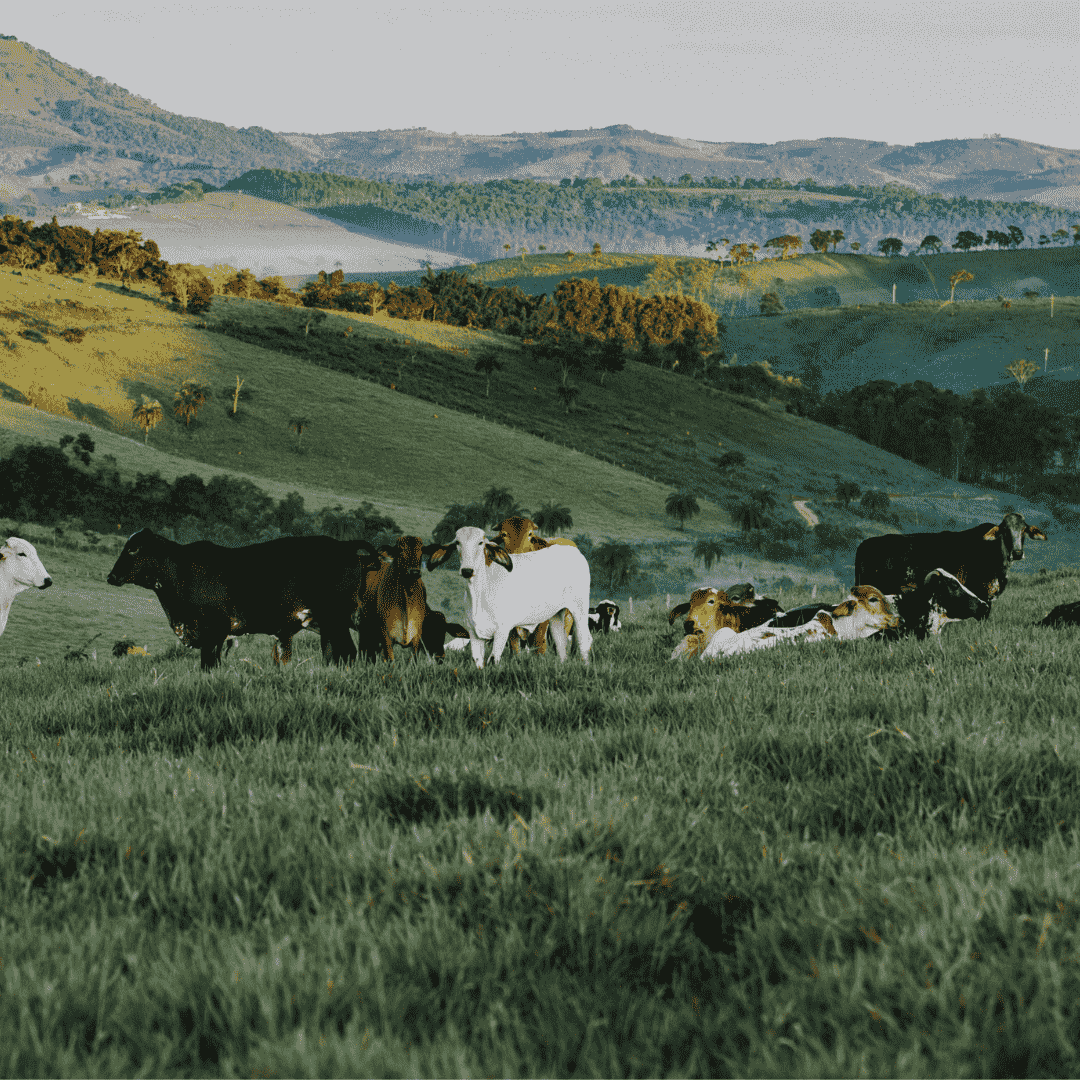
Regenerative Agriculture
What is Regenerative Agriculture?
Regenerative agriculture or regenerative farming is a model of crop or livestock production that uses a variety of practices to restore and conserve ecosystems connected to the land. While at the same time seeks to increase productivity and mitigate environmental impacts like climate change and biodiversity loss.
Regenerative agriculture both encompasses traditional, proven practices as well as innovation in management, measurement and practice. It is an alternative way of raising crops and animals that, by working with natural systems, ensures the long-term viability and resilience of the land to continue to provide for generations to come. The focus on restoration and regeneration of nature is about ‘doing more good’ through agriculture, rather than just ‘less bad’[1].
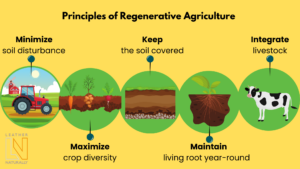
The practice of Regenerative Agriculture:
Regenerative agriculture distinguishes a kind of farming that goes beyond simply sustainable as it seeks to improve ecosystem services within farming systems. Rather than a set method or simply sustainable farming, regenerative agriculture consists of a multitude of (holistic) farming practices to improve soil health and reverse climate change by expanding biodiversity, improving the water cycle, increasing organic matter in soil structure and transferring carbon from the atmosphere to the soil. For example, it can also include grazing practices that, among others, reverse climate change by rebuilding soil organic matter and restoring degraded soil biodiversity. Doing so, regenerative agriculture acknowledges the role that livestock plays in sequestering carbon in the soil and the relationship of this to soil health.
Why is regenerative agriculture important for the leather industry?
Leather, as a by-product of the meat-industry, begins its life as a raw material on a farm or rangeland. The future of the leather industry is therefore inextricably linked with the future of agriculture. Regenerative farming practices can contribute to a more sustainable leather industry by improving biodiversity and restoring and conserving the ecosystems that facilitate the hides as a raw material for leather production. Doing so, regenerative farming practices can be a powerful nature-based solution, driving a transition with positive environmental and social impacts in the leather supply chain.
Potential benefits of regenerative agriculture for farmers:
Farmers may benefit from regenerative agriculture by increasing the resilience of their land through improved soil health and a more (bio) diverse, stable and sustainable ecosystem that their production depends on. Regenerative agriculture can bring more stable and diversified income streams to farmers through reduced input costs, a higher productivity of the land, crop diversification and accessing growing market demand for sustainable products. In addition, farmers can potentially benefit from the generation of carbon credits. These factors make regenerative agriculture an attractive and viable approach for farmers looking to improve the productivity, profitability and sustainability of their operations.
Key practices for Regenerative Agriculture
The way regenerative agriculture is practiced may vary depending on the region, soils, type of crops or livestock. But there are some key practices that define agriculture or farming as regenerative:
- No-till cropping or No-till farming (also known as zero tillage): An agricultural technique for growing crops or pasture without disturbing the soil through tillage. No-till farming decreases the amount of soil erosion that tillage causes in certain soils, especially in sandy and dry soils on sloping terrain.
Instead of tilling the soil, farmers use specialized equipment to plant seeds directly into untilled soil, leaving the crop residues from the previous harvest on the surface. The main idea behind no-till cropping is to maintain the integrity and structure of the soil while reducing erosion, preserving moisture, and improving soil health.
- Diversification: Diversification of annual cropping systems to include legumes, perennial crops, and forages in rotations. Diversification helps improve soil health by promoting biodiversity and enhanced nutrient cycling, disrupts and reduces the risk of pest and disease outbreaks, supports natural weeds suppression, optimizes nutrient cycling and reduces the need for synthetic fertilizers. At the same time, diversification in crops can enhance the economic resilience of farmers by generating more stable and diversified income streams.
- Use of organic soil amendments, such as cover crops, manure, and biofertilizers:
Cover crops for example are planted in conjunction with row crops, either between cash crop seasons or alongside cash crops as intercropping. They can include a wide variety of plant species such as grasses and grains. Cover crops are highly beneficial for a multitude of reasons, ranging from soil health improvement by protecting against erosion, minimizing nutrient run-off and retaining soil moisture, to weed suppression, better nutrient cycling, biodiversity promotion and pest-and disease management. Cover crops especially are linked to increased carbon sequestration, as they can capture atmospheric carbon dioxide through photosynthesis and incorporate it into the soil as organic matter.
- Grazing practices: The reintegration of grazing animals back into cropping systems, through for example managed grazing. This involves carefully managing the movement of livestock across pastures to prevent overgrazing and exhaustion of land. Livestock are rotated between different paddocks or sections of pasture, allowing vegetation to recover before being grazed again. Grazing practices also include converting marginal and degraded cropland into permanent pasture and forests, and restoration of wetlands.
- Change in fertilizer use:
- Reduction of nitrogen (N)-fertilizer use, changing the type of fertilizer used (e.g., legumes, controlled-release, and nanoenhanced fertilizers), and use of nitrification inhibitors.
- Application of organic fertilizers, that feed the soil microbial systems and improve mycorrhizal functions, reducing nitrogen (N) and phosphorus (P) runoff and ground water losses.
- Water conservation: The harvesting of rainwater, improved irrigation techniques, and the use of cover crops to reduce evaporation, and reduce water consumption and the strain on water resources.
- Biodiversity preservation: Supporting habitat restoration and biodiversity conservation through for example planting native species, creating wildlife corridors and strips of herb-rich grassland.
Indicators to measure the impact of regenerative agricultural practices
The concept of regenerative agriculture is still fluid and subject to a myriad of studies in different systems that can provide for better understanding on the best practices for each specific region. Core principles range from keeping the soil always covered with minimal disturbance to integrating livestock into cropping rotations or forestry systems. The minimization of external inputs is also sought after.
Nevertheless, there are some commonly agreed indicators to measure the impact of regenerative agricultural practices, indicating the various elements to invest in:
| Ecosystem topic | Indicator (s) |
| Soil Health | Physicochemical aspects of the soil |
| Biodiversity | Microbiology, Presence of local fauna and flora |
| Water | Availability of water, Humidity |
| Economic performance | Production, Profitability |
| Carbon emissions | Carbon storage (in soil) |
[1] Regenerative Fund for Nature | Kering
References:
https://www.fcav.unesp.br/Home/departamentos/zootecnia/anaclaudiaruggieri/7.-ilp-modelo-embrapa.pdf
O’Donoghue, Tom, Budiman Minasny, and Alex McBratney. “Regenerative Agriculture and Its Potential to Improve Farmscape Function.” Sustainability 14.10 (2022): 5815.
Teague, W. Richard, et al. “The role of ruminants in reducing agriculture’s carbon footprint in North America.” Journal of Soil and Water Conservation 71.2 (2016): 156-164.
[1] https://www.carbonbrief.org/explainer-desertification-and-the-role-of-climate-change/
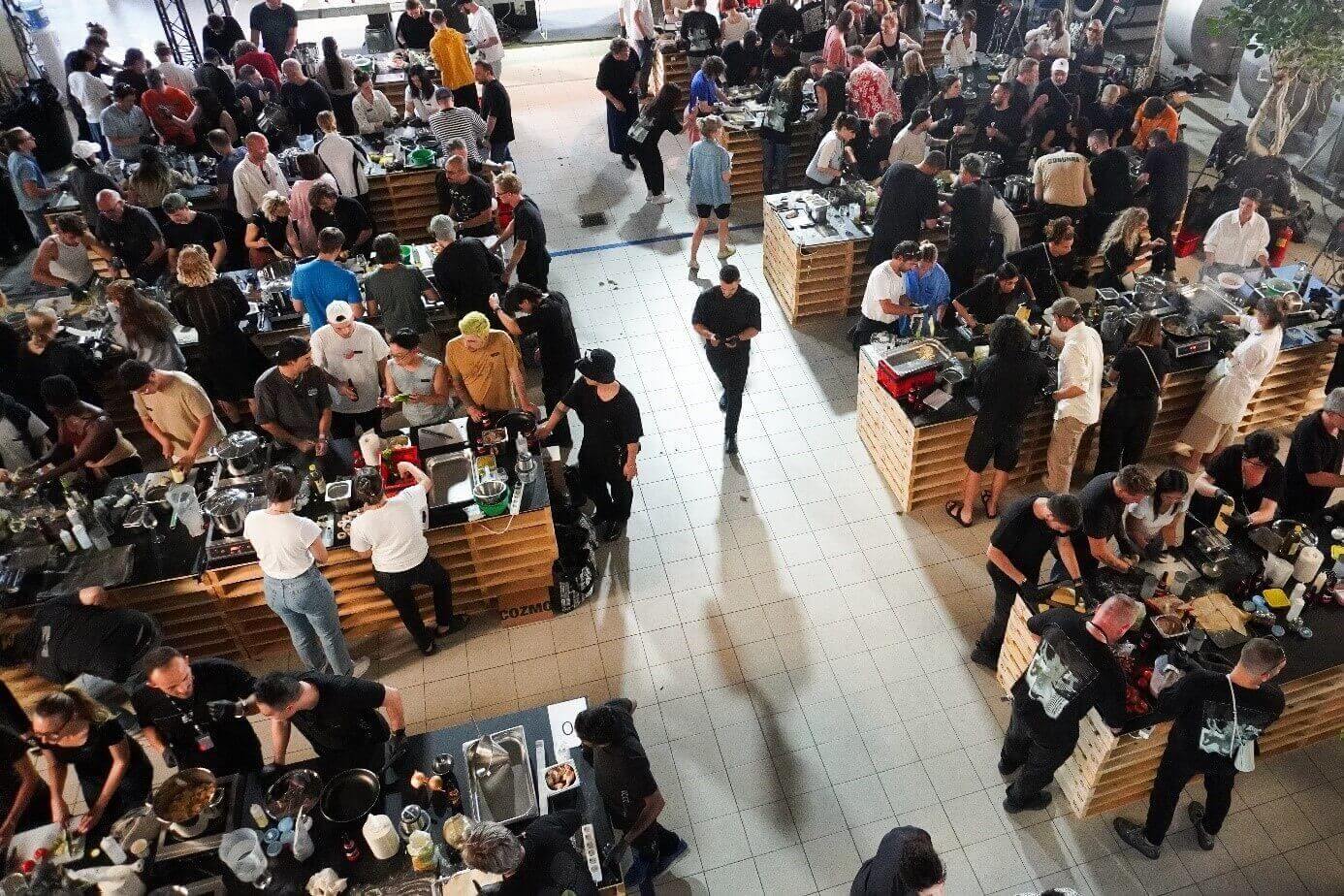
HOT-SHOP 16
180 creative people from all around the world came together for HOT-SHOP 16
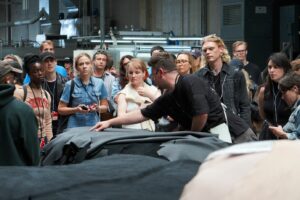
HOT-SHOP, ECCO’s annual four-day workshop designed to challenge conventional leather creation, was all about culinary discoveries. Not food-based, but leather-based. The aim was to put a leather-based culinary dinner on the table throughout the event. This includes a starter, main and dessert.
Leather Naturally got the opportunity to witnessed this unique event for 1 day.
Step into ECCO HOT-SHOP 16 and you will be immersed in an atmosphere of creativity and craftsmanship. Here, 180 creative designers, artists, leather technicians, material specialist and so many more from all over the world came together, to think completely out of the box, without restrictions and where they could be 100 per cent themselves.
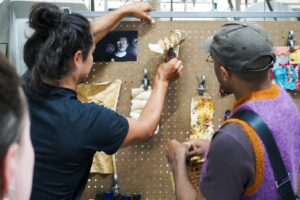
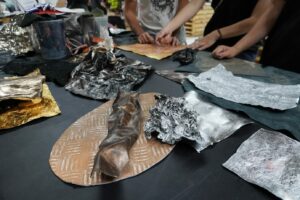
The vibes in this temporary creative hub felt amazing. The designers were divided into small groups and guided by 1 or more Ecco specialists. Each group received a box with ingredients that could be used to create the right leather dish. E.g. Organic – natural pigments, organic oils, organic butter, organic flowers, fresh fruits and vegetables, natural tanning powders and indigo (dyestuff). Through brainstorming sessions and ideas, a concrete plan was forged to start with the appetiser for each group. And the word No and this can’t be possible doesn’t exist. Anything is possible and the machines to make this creative leather dish were at the designers’ disposal.
Whether you are talking about designing, creating, cooking or leather-making – the art of creation is all about mixing the right ingredients in just the right quantities at the perfect time.
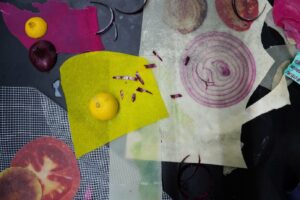
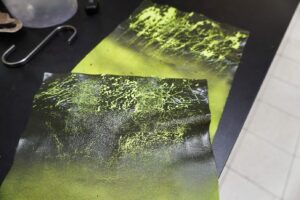
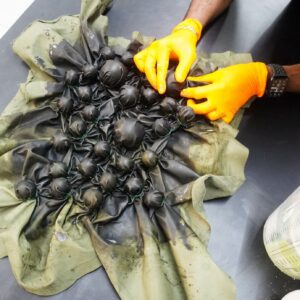
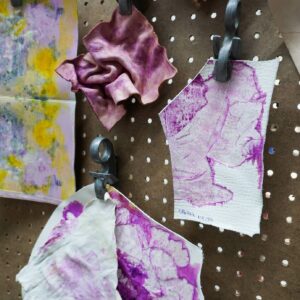
Credits: Ecco

Sustainable Leather Forum 2023
Toward a new vision for a responsible leather supply chain
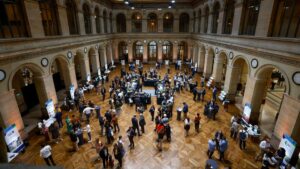
The Sustainable Leather Forum, an event that brings together professionals from the leather, fashion, luxury and design industries, is back for its 5th edition.
This international symposium aims to discuss the major challenges facing the leather industry and its positioning in terms of Corporate Social Responsibility.
On the agenda:
#The role of standards in the leather industry
#New approaches in agriculture and breeding and their impact on raw materials
#CSR, a real cog in the wheel in the leather goods sector
#The Personal Protective Equipment industry, pioneers of CSR
#Circular fashion: maintenance and repair favored
This fifth edition, organised in the form of round tables and keynotes, will focus on topics related to the development of a creative, innovative and increasingly sustainable industrial sector.
A day of reflections which will also be punctuated by numerous interventions of experts of the sector and public and political personalities.
Also, many companies and organisations will be exhibiting at this forum. Traceability, sourcing, training, product development… they will share their solutions and best practices in terms of CSR to support the French Leather Industry.
The Sustainable Leather Forum offers this year several new services:
- partipants from abroad can either come to Paris or follow the 5th edition live streaming
- personal profile that each person that is taking part of the forum can create via their dedicated platform
- a matchmaking service to oganise your meetings onsite the 11th September or the day after if you are following remotely from your online profile
Leather Naturally will participate in the Sustainable Leather Forum.
Register now or for more information: https://www.slf-paris.com/
Check the Social Media Channel of Sustainable Leather Forum on LinkedIn:
https://www.linkedin.com/company/sustainable-leather-forum/


The Porsche commitment: How sustainable leather fits the brand's vision
Porsche is committed to sustainable leather sourcing
Mrs. Barbara Frenkel – member of the Executive Board Procurement at Porgsche AG says in a Social Media post: Leather is a mark of quality for our customers. At Porsche AG we are committed to sustainable leather sourcing. An important step is that we have joined Leather Working Group (LWG). LWG is a non-profit organization that advocates transparency and universal environmental and social standards in the global leather supply chain. It also offers certification for leather manufacturers. 📋
What do we do at Porsche Procurement regarding leather? A lot:
✅ We apply material-specific specifications that are mandatory for all new contract awards for leather suppliers. Among other things, they must disclose the country of origin of the raw material and be audited by external auditors against a leather-specific sustainability standard such that offered by LWG.
✅ Equally important: It is mandatory for our suppliers to respect animal welfare and ensure responsible production and processing of leather.
Please read more by clicking on the Press Release: Porsche_committed_to_more_sustainable_leather_sourcing
Credits: Porsche AG