


Aukje Berden joins Leather Naturally Management Board
Leather Naturally is pleased to announce that following a member vote, Mrs. Aukje Berden has been confirmed as a new member of the Leather Naturally Management Board with immediate effect.
Aukje has a MsC in Economics from Tilburg University and many years’ experience in agribusiness and sustainability, working with global networks and partnerships.
Aukje’s experience brings different perspective to the group that can only strengthen it further. Our thanks to Smit & Zoon who support her in this role.
Leather Naturally promotes the use of globally-manufactured sustainable leather. Its website www.leathernaturally.org is a key resource for information about modern leather manufacturing and the part it plays in a more sustainable society.

SLAY - A Balanced View
Do you have questions about the film Slay?
The film Slay makes some startling claims about the leather industry, but are they true? In order to address some of the questions that viewers have, Leather UK has summarised the issues and balanced them with the facts around leather production that are so often misunderstood and misrepresented.
It explains that:
- Leather is a by-product that if not used will be thrown away and wasted.
- Water use in leather making is too often over-estimated. One leather hide takes around 600 litres of water, one pair of shoes around 44 litres – very different from the numbers quoted in the film.
- It is not better to put hides in landfill rather than use them, Slay unfortunately bases an assertion that it is better to throw hides away on a flawed calculation, which quite seriously leads to the wrong conclusion. There is a separate report on that calculation here.
- Leather does not drive deforestation. As hide and leather production does not drive livestock rearing, livestock production would continue even if no leather was made. The lack of influence that the leather industry has on upstream livestock practices has been recognised by the WWF.
- ‘Faux leather’ is plastic and derived from fossil fuels. Using it instead of leather does not stop livestock being raised for meat, and this is before all the issues with faux leather around fossil fuel inputs, lifespan and disposal at end of life. Faux leather is plastic with all the problems inherent with that.
- The piece also sets out a reasoned explanation of chemical use, leather alternatives and a case that while every industry should be subject to scrutiny, media productions such as Slay add nothing to the conversation and do help consumers better understand leather.
The complete piece can be read here.
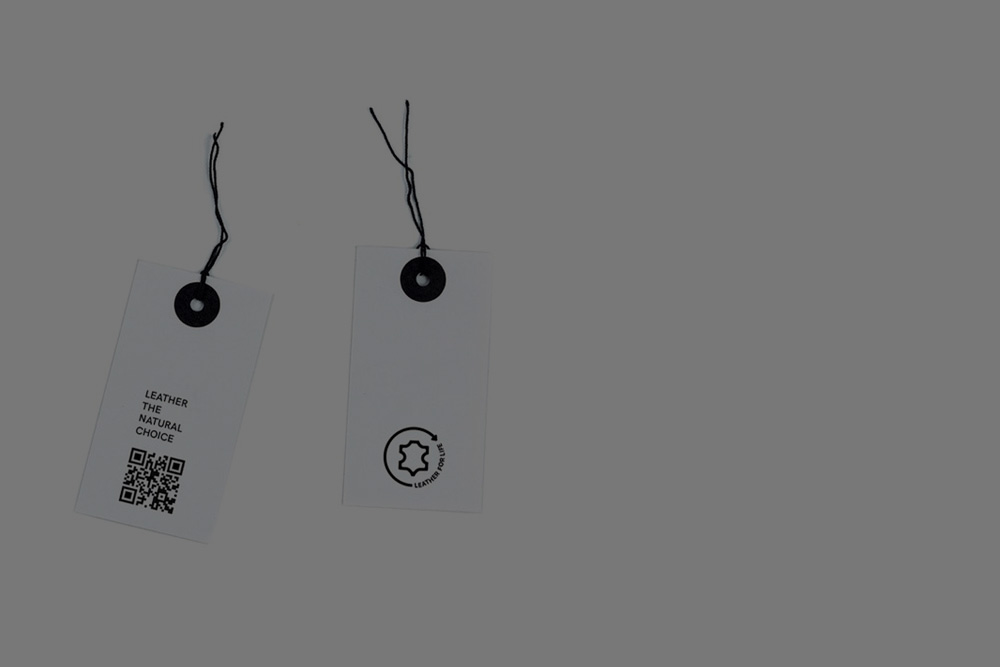
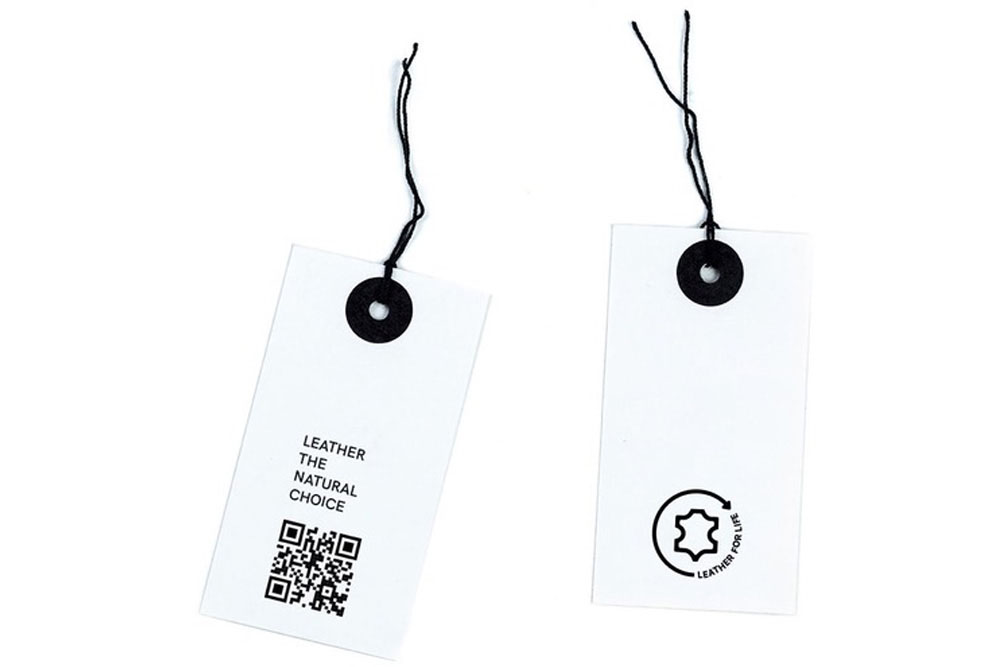
Leather UK Launches Swing Tag Initiative
A ‘Leather for Life’ tag will be available to all UK leather and leathergoods manufacturers.
Supported by The Worshipful Company of Curriers, Leather UK has announced a new swing tag that will be available for use by anyone involved in the design, manufacture and retail of leather and leather goods in the UK.
The tag will carry a QR code, which will direct consumers to the latest information about leather, from production to after care. It will include a range of facts, including how leather is produced and its status as a by-product of the food industry.
Making the information easy to access at point of purchases, when consumers are making product choices is key to the effectiveness of the tag that also addresses misinformation and gives access to more detail on leather’s sustainability credentials.
Looking get involved? More information can be found here.
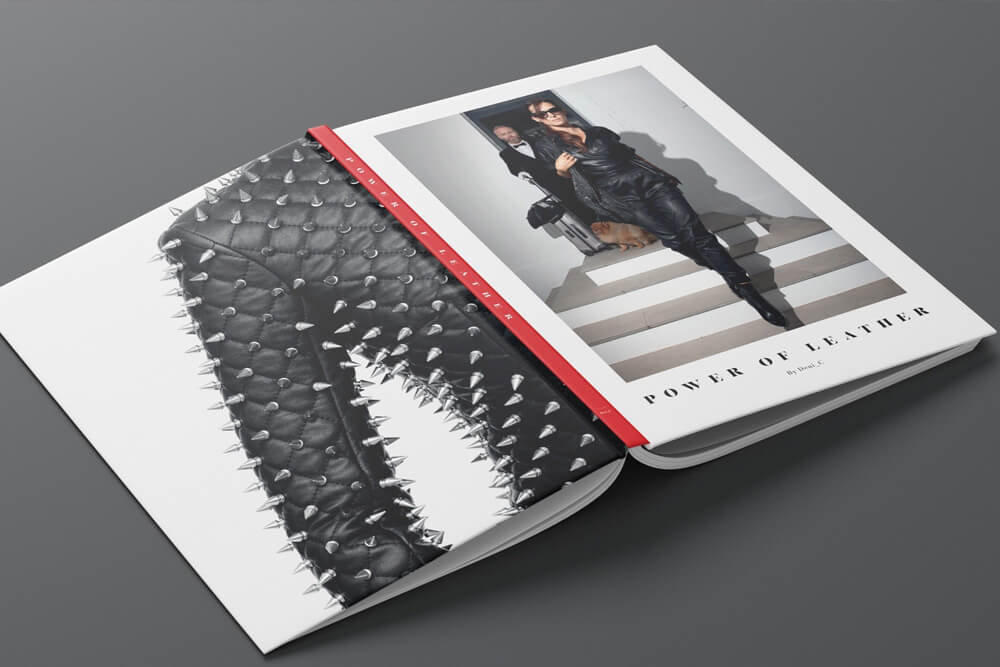
How Leather Was Life Changing for Deni
Leather was life-changing for Deni: it makes you visible, seen, heard and respected.
What do you think the power of leather is and why is it life changing?
Leather attracts attention and creates a fascination. It can also give confidence and protection. On top, leather is a sustainable material and it is a part of one of the oldest systems for circular economy. For thousands of years, leather was always a secondary product of the food industry.
Leather can be life changing because it makes you visible, seen, heard and respected. It encourages you to develop your personality because suddenly people expect you to take the lead. I am not aware of any other material with such a power.
You said leather fashion is not only in line with my believes, it’s deeply part of my personality. Please explain.
In my case, I have always been a dominant person, since a little child but the world around me did everything to limit it. Leather helped me find my position and gave me self-confidence to become myself.
Like many people of my generation, I do care about the impact we have on the ecosystem and I do my contribution by fighting against over-consumption. I love efficiency and deeply hate wasting. Be it food, water, people’s energy, time or clothes. Leather clothes, if well maintained, can last for a lifetime. They can be even handed over to other people and even to the next generation.
Where is your passion for leather coming from?
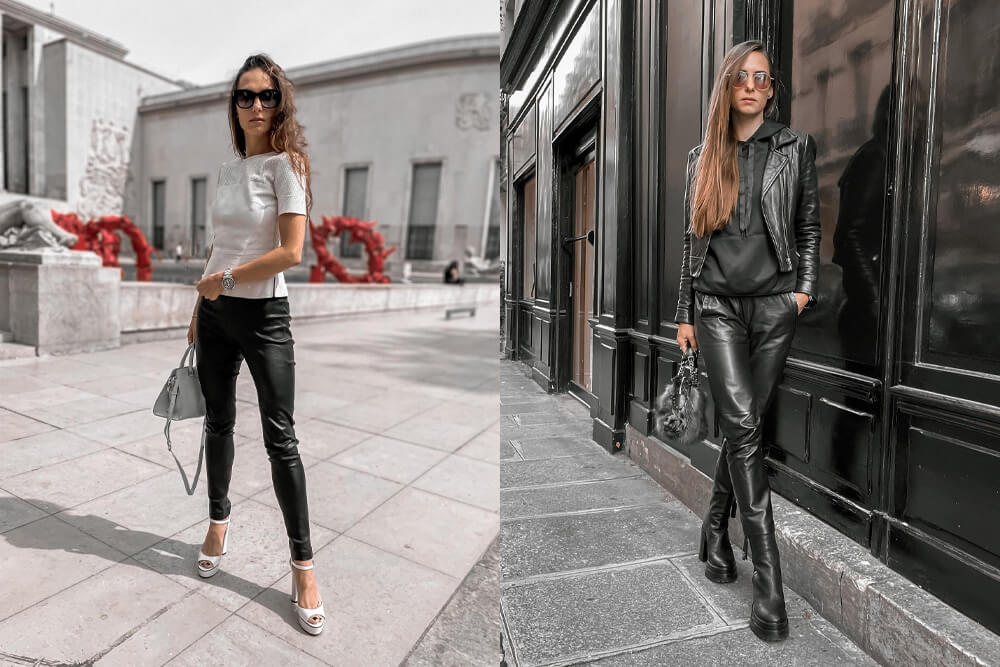
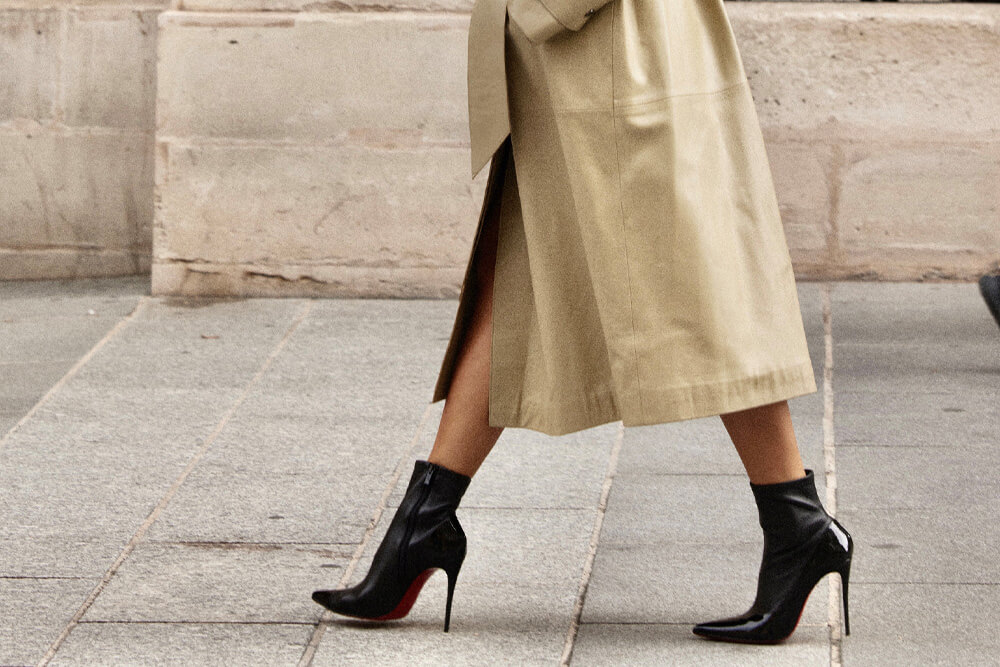
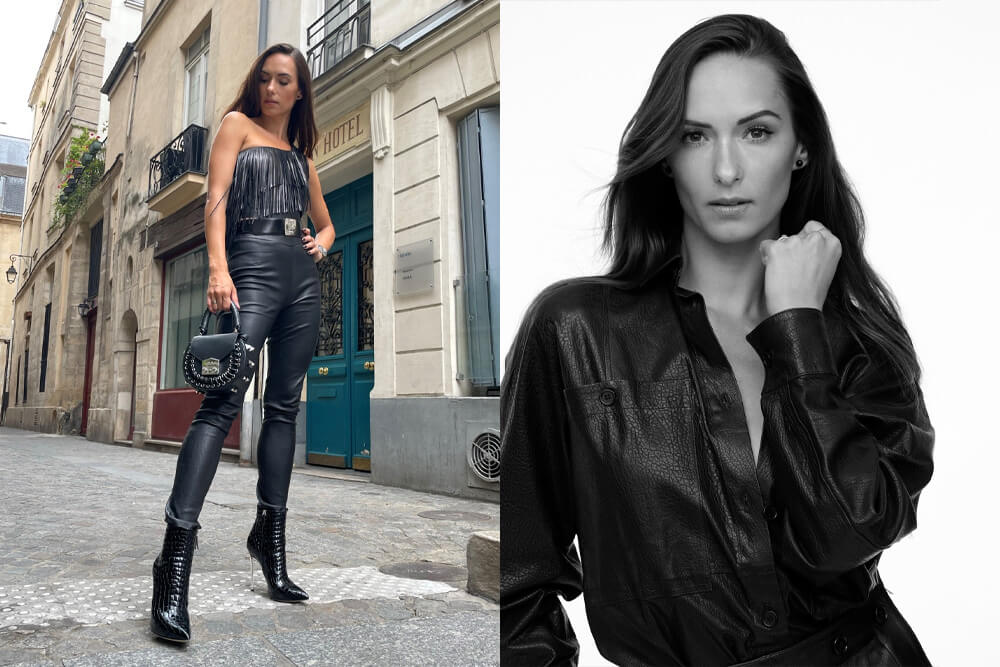
It came by accident (or was it a destiny?). I got my first leather jacket when I was 25 and saw a new world opening up for me. The impact it had on me and on people around encouraged me to slowly replace my wardrobe to the point that today, my wardrobe contains 90% of leather.
Do your leather clothes also say something about your character?
Of course, I believe that in general your wardrobe says something about yourself. Whether you care or not about fashion, what you wear gives the world a good hint about who you are. For my friends, colleagues and clients, the fact I wear leather everyday gives a clear indication of who I am.
Do you have a background in leather?
Not at all, I have actually been very far from leather for most of my life. When I was young I didn’t know anyone wearing leather. It wasn’t even in the fashion wave in Prague when I grew up.
What do you think of the sustainability of leather and its role in a circular economy?
Leather is the complete opposite of the fast fashion industry we see growing for several years now. Leather clothes can last a lifetime and it resonates with my very cost conscious education. Then, I know people struggle to understand it but leather is a secondary product of the food industry and as such, is part of one of the oldest systems for circular economy.
You created a leather book. What drove you to make this book?
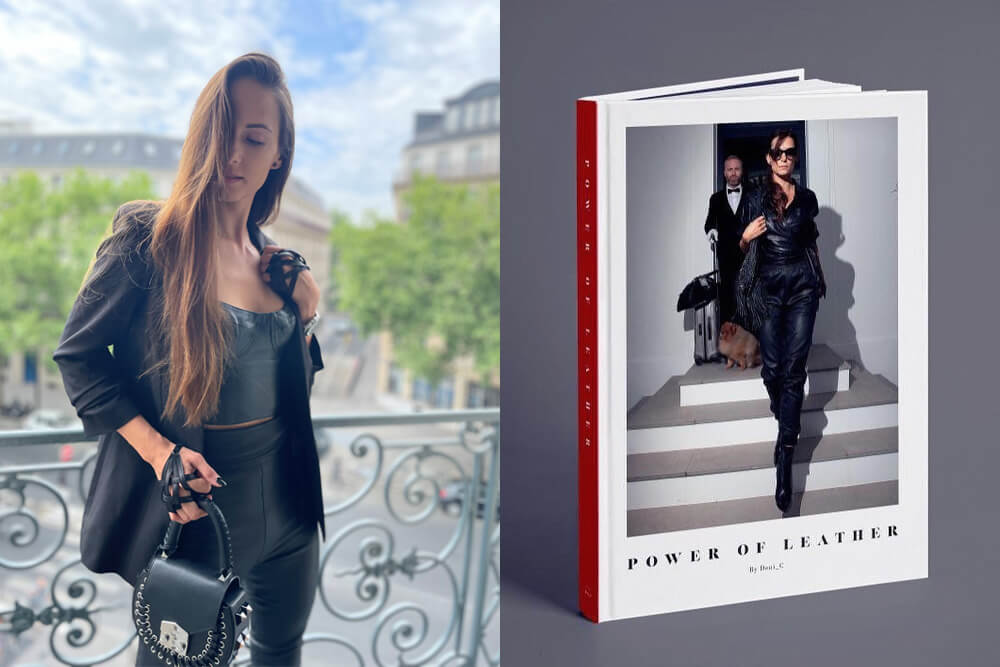
Writing a book about my life in leather came naturally after I started having an audience on Instagram. I got more and more followers asking me about leather, about my motivation to wear it. Questions came also from my friends and family as I naturally developed and changed. Writing a book was a nice way to provide all those answers to the world.
Besides that it was a nice personal challenge. I like to push my limits and learn new things. During this project which took me approximately 7 months, I learnt enormously and developed skills that I never thought I would.
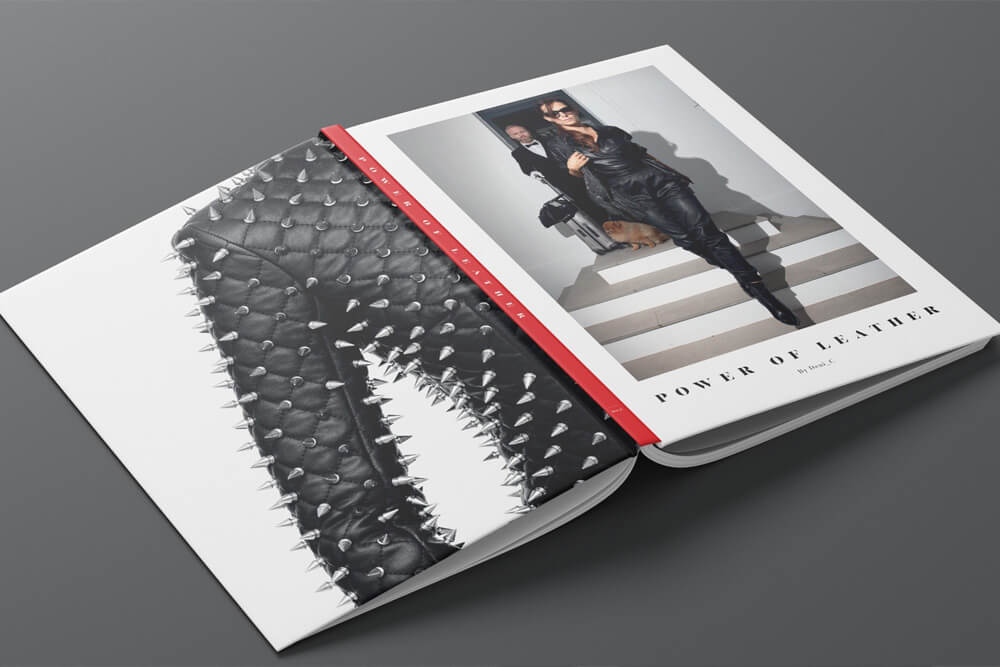
In your book people can find 19 stories to discover why it is practical and exciting to wear leather. Would it be possible to explain one story briefly?
Please share a piece of your secret. In one of my stories I write about the dress code in the office. The impact my leather clothes suddenly had on my co-workers. The silence in the room when I entered, their eyes on me.
From one day to another, perceptions of myself have changed. I got the respect and even the admiration.
At that time in the company I was working for, we had a dress code which says no jeans and nor casual clothing in the office. I always respected that. Even the day I changed cotton pants for leather leggings, wondering if HR is aware of the impact leather can have on people. 😉
The chapter is called forget the dress code and the message behind it is, that you can still stand out while remaining within the rules.
In the end, how can you have a positive impact and achieve your goals if you are invisible? If no one even notice you? My secret is to use leather as a tool to get where you want to be.
What do you think consumers like to know about leather and what should a consumer need to know about leather?
Based on my experience, people would like to know why they are attracted to leather. Why it touches their psyche. They would like to understand more about the superpower leather has, why it can even become an obsession for some people and how to use it in order to serve their objectives.
Concerning what they need to know. People do not realize that leather is part of one of the oldest systems of circular economy and it is actually a very sustainable product. Most people believe that we kill animals for the skin while actually, it comes massively from the food industry and it would be wasted otherwise.
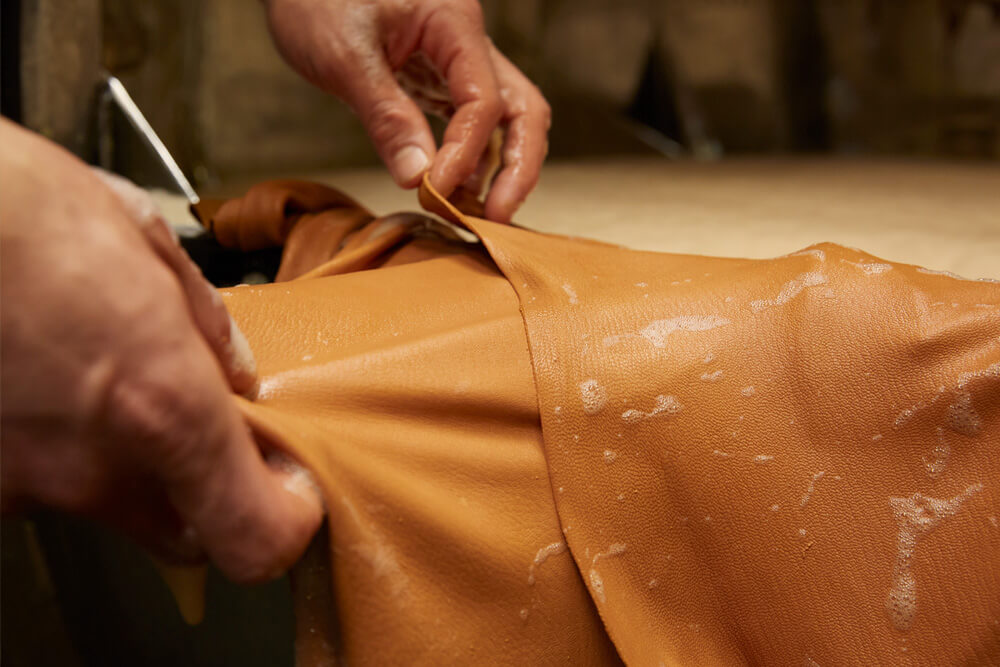
Marai: Our Products Tell a Story...
“More than a new line of bags: Our products tell a story.”
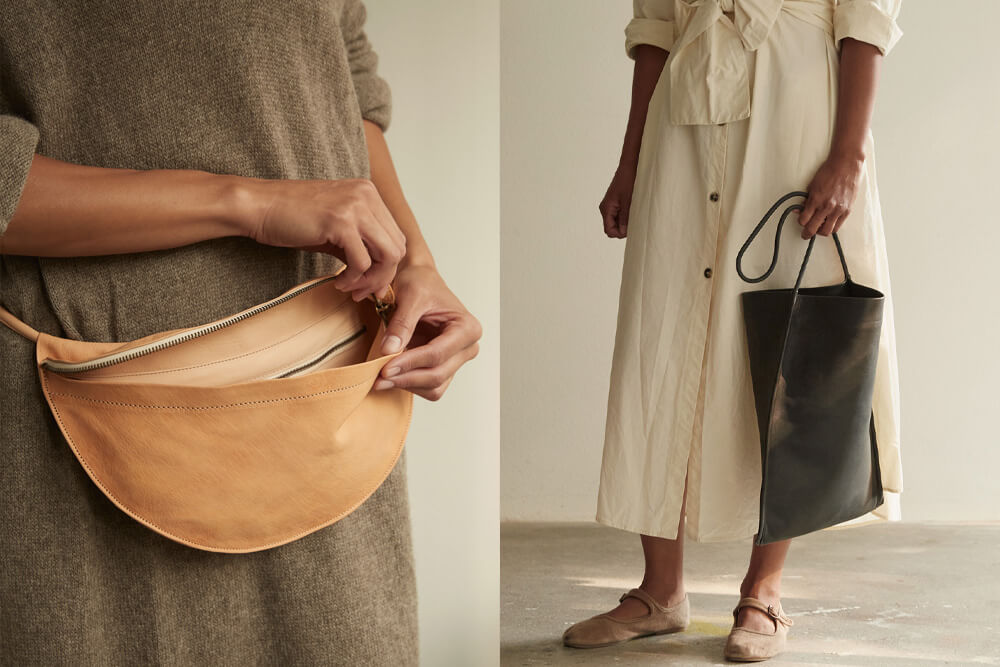
With MARAI, we created more than a new line of bags: Our products combine the use of local resources from the food industry, the strengths of mindful leather production, local craftsmanship and timeless, high-quality design.
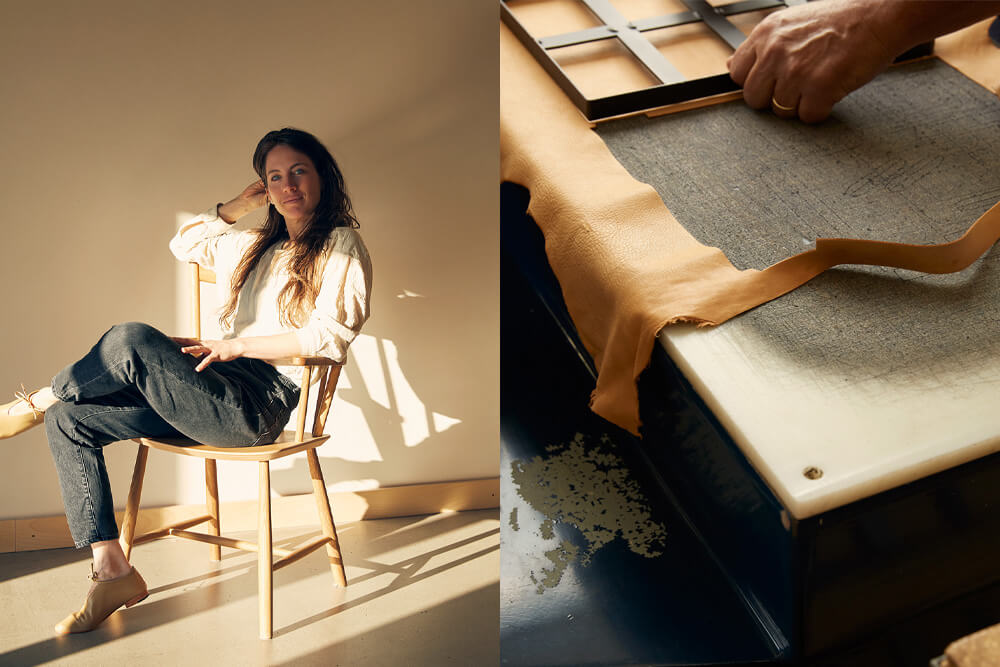
The idea for MARAI was born after we learned that Switzerland brings tens of thousands of goat and sheepskins from the food industry to landfill every year. This has been taking place ever since the regional leather industry came to an end in the 1950s. Fortunately, some of these hides still find their way to G. Neuenschwander Söhne AG in Oberdiessbach, a trader and tanner of hides and furs with a tradition extending back over 160 years. Due to decreased demand, however, the hide trade has been slumbering for several decades: the warehouse is bursting at the seams. If no buyers are found for the hides in the near future, they will end up in the landfill.
With MARAI, we want to counteract this wasteful development. In a world where resources are becoming increasingly scarce, it is precisely these natural and circular materials that need to be used – instead of burning them. By processing these hides into leather, we are contributing to the meaningful use of available resources.
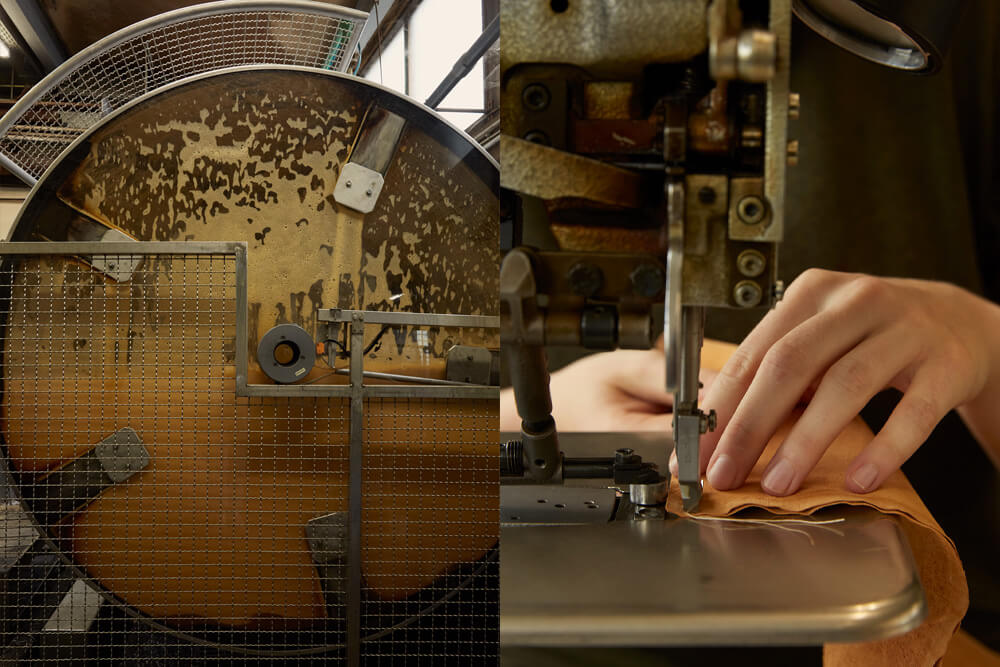
We process the skins in a traditional tannery in southern Germany using natural tanning agents to create beautiful leather that will last for decades. We leave the leather in its pure form: Instead of covering up natural features, small traces of nature remain visible on the leather, giving each piece its individuality. Over time, the leather becomes softer and darker and acquires a unique patina.
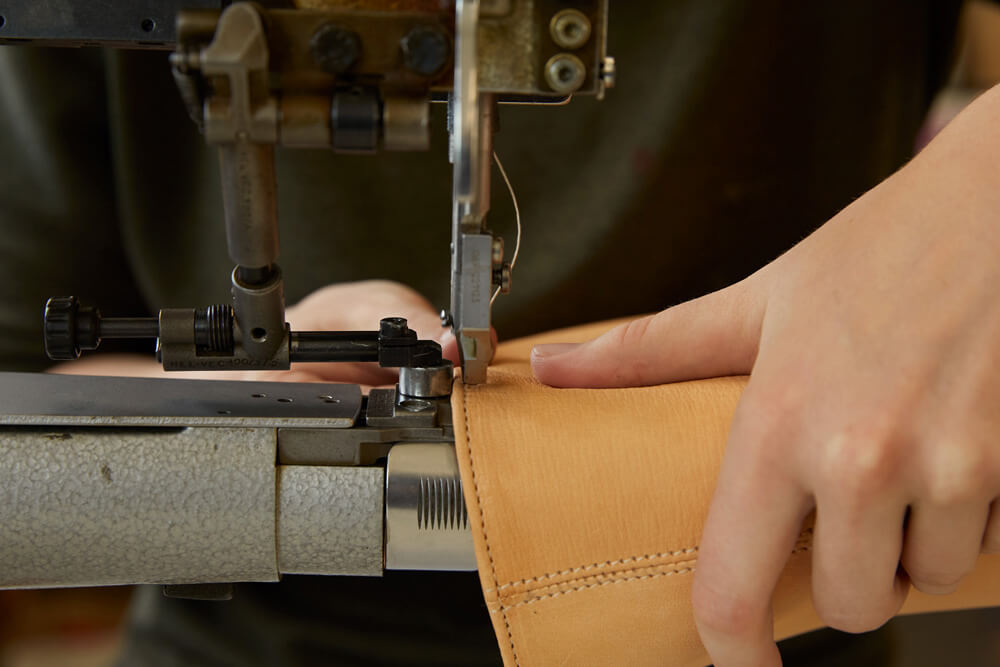
The timelessly designed bags and accessories are hand-sewn from the first cut to the last seam in a nearby manufactory and in small Swiss businesses. Each product is unique, made with expertise and dedication.
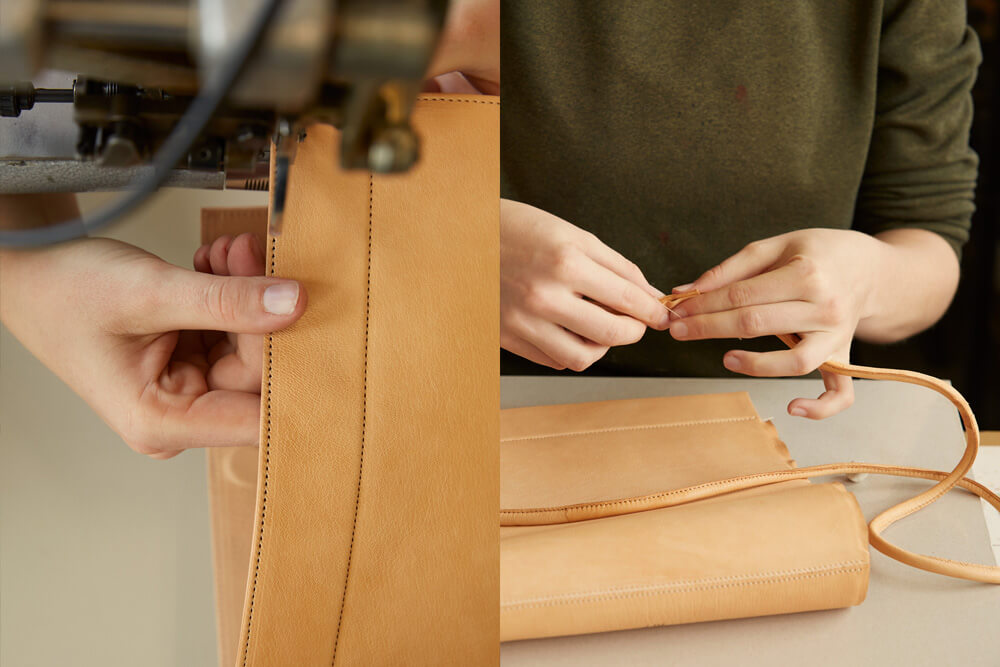
It is not our primary goal to produce in mass quantities blindly. Rather, we want to make our products with care and inspire people with the story our products tell. We want to stimulate thinking and create awareness for the connection between agriculture and fashion. We want to show the consequences of food production and enable mindful purchasing decisions. And so we hope that our customers will be reminded of these connections every time they come into contact with our products.

COP27 Our Materials Affect Our Climate
The International Leather Industry calls on COP27 to recognize the role that natural materials such as leather, have in addressing the challenges of climate change.
Earth’s legacy – A place for Leather
The undersigned representatives of the global leather industry are united in our conviction that natural materials, such as leather, have a vital role to play in addressing the challenges of climate change. Leather is a natural material, crafted from a raw material that arises as a waste from the production of the food that we all need. A leather supply chain that respects the role of livestock in regenerating soil, that avoids the waste of an unavoidable by-product and leads to the production of long-lived and readily disposable products can help limit the harm caused by fossil fuel-based synthetic materials.
The choices we make as consumers, and in particular, the materials used in the products we buy, have a significant impact on the environment. The carbon in leather is biogenic and a component of the natural carbon cycle of the planet. The raw materials of leather production, hides and skins, are an inevitable, renewable by-product of feeding the global population. To produce leather out of a waste stream is to honour Earth’s intrinsic circular nature. Leather is not fossil-based carbon and when leather reaches the end of its life, it can be safely returned to the soil as compost. Leather does not create micro-plastics or linger for millennia in landfills. The majority of the world’s leather is made responsibly and does not harm the planet.
If we are to prevent further damage being done to the planet, we must learn to make the best use of the resources available and to do so without diminishing them or causing harm to the environment. It should not be acceptable that we are wasting huge volumes of a natural, readily available versatile raw material in hides and skins. Every year, an estimated 120 million hides, equivalent to approximately 600 million square metres of leather, are thrown into landfill, creating nearly 15 million metric tonnes of CO2 emissions. Furthermore, this wasted leather will be replaced with fossil fuel-derived synthetic alternatives, with the additional emissions and impacts that entails. In the process, we are losing the opportunity to put shoes on over 2.5 billion pairs of feet. That’s 33% of the world’s population that we could provide shoes for.
We urge people to stop and to think. To decide for themselves whether they truly believe that plastics are better for our environment than natural, renewable, biodegradable materials. We believe that the use of leather can support our journey to living in harmony with our planet. Leather is the ultimate responsible legacy – it lasts for decades, encouraging re-use and slow-fashion. The industry is modern, the chemicals are safe, the material is an ideal choice for a sustainable future.
Therefore, we, the undersigned organisations, once again call on the COP forum to…
…Recognise the cyclical, climate efficient nature of natural fibres and their potential for a positive contribution to reducing the climate impacts of consumer products.
…Encourage the use of natural fibres wherever feasible and reduce unnecessary reliance on fossil-fuel-based materials.
…Support LCA methodologies that accurately account for the environmental impact of all materials, including end of life properties.
…Promote ‘slow fashion’, durable products, and items that can be used many times, repaired and refurbished, and last for years.
Signatories to the Leather Manifesto
- Asociación Española del Curtido (ACEXPIEL – Spanish Tanners’ Association)
- Associação Portuguesa dos Industriais de Curtumes (APIC – Portugal Tanners’ Association)
- Australian Hide Skin and Leather Exporters’ Association Inc. (AHSLEA)
- Centre for the Brazilian Tanning Industry (CICB)
- Centro Tecnológico das Indústrias do Couro (CTIC – Leather Center in Portugal)
- China Leather Industry Association (CLIA)
- Confederation of National Associations of Tanners and Dressers of the European Community (COTANCE)
- International Council of Hides, Skins and Leather Traders Association (ICHSLTA)
- International Council of Tanners (ICT)
- International Union of Leather Technologists and Chemists Societies (IULTCS)
- Fédération Française des Cuirs et Peaux (FFCP – French Hides & Skins Association)
- Fédération Française Tannerie Megisserie (FFTM – French Tanners Association)
- Leather and Hide Council of America (LHCA)
- Leather Cluster Barcelona (LCB)
- Leather Naturally (LN)
- Leather UK (LUK)
- Leather Working Group (LWG)
- One 4 Leather (O4L)
- Society of Leather Technologists and Chemists (SLTC)
- Sustainable Leather Foundation (SLF)
- Swedish Tanners Association (STA)
- Turkish Leather Industrialists Association (TDSD)
- UNIC Concerie Italiane (Italian Tanneries Association)
- Verband der Deutschen Lederindustrie e.V. (VDL – German Leather Federation)
- Wirtschaftsverband Häute/Leder (WHL – German Hide and Leather Association)
- Zimbabwe Leather Development Council (ZLDC)

Textile Exchange Adopting The Term Leather
In the November news – The Textile Exchange has released the definition of “leather”.
The Textile Exchange has adopted a position for the term “leather”. The term should only be used for materials derived from tanned hides and skins. This decision aligns the organisation with important pieces of legislation in several countries.
It will also provide more clarity for consumers on what is real leather or what is vegan material as out of our survey, together with the Leather UK & University of Northampton, under 2.000 consumers were questioned about so-called “vegan leather” there is a lot of confusion among consumers. 54% of the consumers had no idea what “vegan leather” is or what the composition of this material is and that it could potentially be 100% made from polyurethane or pvc (plastic).
Released definition of “leather” by Textile Exchange:
At Textile Exchange, we define leather according to the following criteria, aligning with the EU directive 94/11/EC, ISO 15115, and EN 15987:2015.
- A hide or skin with its original fibrous structure more or less intact and tanned so it does not rot
- Either with or without hair or wool attached
- Inclusive of hides or skin split into layers or segmented either before or after tanning
- With any surface coating or surface layer no thicker than 0.15 mm.
The term “recycled leather” should only be used if the fibre structure remains intact during the recycling process. Leather disintegrated into fibrous particles, small pieces or powders and combined or not with chemical binding agents, and made into sheets, with a minimum amount of 50% in weight of dry leather fibres should be referred to as “recycled leather fibre.”
Materials that do not meet the definition above will not be described by Textile Exchange as leather, regardless of any past designation or common usage of the term.
There is currently a gap in the legal framing of the classification and naming of the diverse materials sold as alternative materials to leather. This leads to misleading labelling where a fossil-based synthetic material could be referred to in the same way as an innovative plant-based material, making it difficult for a consumer to differentiate the two.
We’re encouraging policymakers to close this gap. For now, these diverse manmade materials, fully or partially plant-based will be grouped in the ‘Manmade non-fiber materials’ category of our reports and programs, until further legal guidance on the naming and categorization of these materials is available.
Read the full article from the Textile Exchange
Source: Textile Exchange
Website: https://textileexchange.org/
Real Leather. Stay Different. Crowns Winner
International Student Design Competition Crowns Winner
- Competition asks young designers to think natural to break the fast fashion cycle
- 2,000 students from 160 institutions and 40 counties compete for title
- Judging panel spans from metaverse to high fashion including Hugo Boss MD, Mulberry Head of Sustainability and Institute of Digital Fashion co-Founders
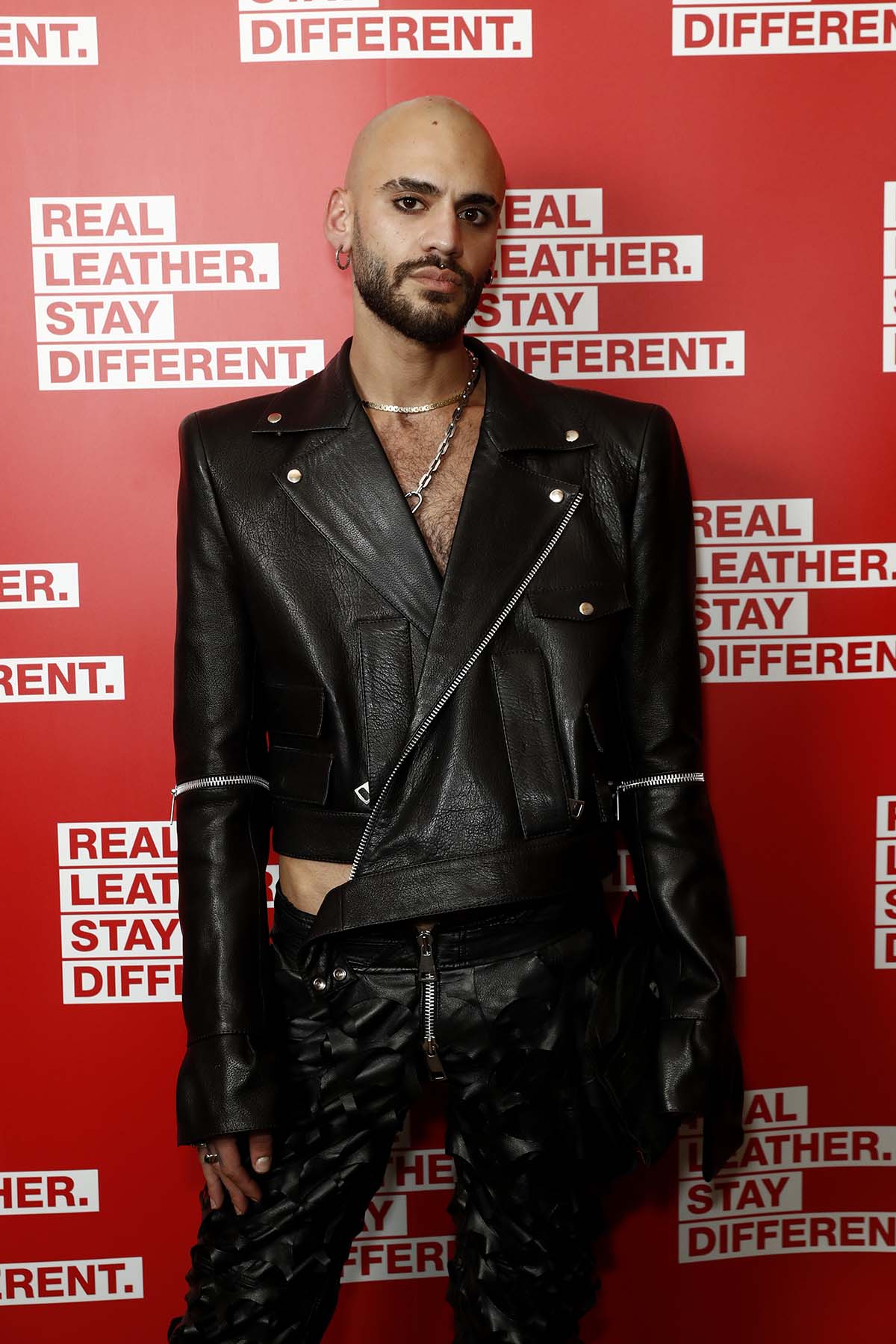
The winner of Real Leather. Stay Different. International Student Design Competition 2022, in association with ArtsThread, was announced last night [2 November 2022] at a Live Final. Gal Benjamin, a Fashion Design graduate of Shenkar College of Design, Engineering and Art in Ramat Gan, Israel, was crowned International Winner. Their design, entitled ‘’Alexithymia‘’, was inspired by the condition of that name which describes the inability of men to recognise and express emotion as a result of repressive upbringings caused by the constraints of the stereotype of masculinity.
The award was presented by Chairman of the Judges Kerry Brozyna, Vice President of Wolverine Worldwide at an awards party attended by leading fashion industry experts and influencers. The judging panel included Christopher Koerber, Managing Director, HUGO BOSS, Rosie Wollacott Phillips, Head of Sustainability, Mulberry, Leanne Elliott Young and Cattytay, Co-Founders, Institute of Digital Fashion and Mike Adler, Style & Fashion Director.
Commenting on their win, Gal said:
“I’m amazingly proud to win this award. My piece is made from offcuts of leather from other designs of mine, so I’m pleased to be able to use the leftovers. The whole process really educated me as to how sustainable leather is. My design was inspired by my research into men’s behaviour and the violence and destruction caused by toxic masculinity which translates into Normative Male Alexithymia. It’s intended to challenge the usually aggressive tailoring of menswear.”
Christopher Koerber, Managing Director, Hugo Boss added on behalf of the judges:
“The next generation of young designers has a critical role to play. Not only in thrilling with new designs and styles but putting the industry on a footing where sustainability, the use of natural materials, the reduction of waste and a more considered approach to the cycle of fashion, comes to the fore. Gal Benjamin, with Alexithymia really delivers on this with a piece that radically challenges the notion of toxic masculinity.”
The competition attracted almost 2000 entries from 130 academic institutions representing 40 countries. It encourages the use of leather to deliver a more sustainable future and prompts the next generation of designers to think ‘slow fashion’. Alongside the International Winner the three fellow finalists were Anna Melegh (London College of Fashion, UAL, UK), Gianluca Ambrosini (SCAD Savannah, USA) and Lior Weinberg, (Shenkar College of Engineering, Design and Art, Israel). Shortlisted as winners in their own right, they were respectively International Category Winners in Footwear, Accessories and the People’s Choice nomination. Their entries embraced everyday items as inspiration, from binbag inspired shoes to a pouch shopping bag and elaborate design pieces with intricate pattern-cut trousers and statement woven jacket designs.
The competition encourages future talent to work with natural, sustainable, responsibly produced leather in categories of apparel, footwear or accessories, using at least 50% leather. The judges wanted to see pieces that will not only last but will be loved for a lifetime.
Every year, some 120 million hides are thrown away, ending up in landfill or being incinerated, releasing CO2 and other harmful emissions. The leather industry diverts some two million tonnes of global waste from landfill every year, converting these unwanted materials into beautiful and long- lasting accessories, clothing and footwear.
Supported by the Leather & Hide Council of America, Cynthia Guven, Counsellor for Agricultural
Affairs, Foreign Agricultural Service, on behalf of the US Embassy added:
“Real Leather. Stay Different. is vital in promoting leather to a broad audience and works to ensure best practice and a sustainable future across the global industry. It’s also a wonderful platform for new creative talent as it raises awareness about sustainability in fashion, whether using leather or other natural materials.
“For the competition to receive so many entries, from so many countries, clearly shows the need and impact. Congratulations to all who participated in the competition this year and to our winner Gal. We look forward to following their careers as they become tomorrow’s leading designers.”
Kerry Brozyna, Chair of the Judges, ended the event by calling on attendees to look again at the
materials and processes they use, and to reconsider the use of synthetics, adding:
“The onus is on us to provide industry and consumers alike with the information to make informed choices to the benefit the planet. In the case of leather, a by-product of the meat and dairy industries, that choice is simple. If we need to use marginal lands to produce the food our growing global populate needs, then we need to be responsible in how we use the waste from that process. Natural, durable and biodegradable materials, repurposed for use, must be our priority before we look to the fossil fuel industry for cheap, short-term solutions.”
Finalists’ pieces were made by leather specialists AForce to create a capsule collection, displayed at the Live Finale. AForce is recognised for its innovation in leather design and application and commitment to zero-waste.
Digital fashion partners, the Institute of Digital Fashion (IoDF) will take Gal Benjamin’s winning apparel design ‘into the metaverse’ by creating a 3D asset, bringing the competition to life through an innovative AR try-on that can be experienced globally.
Visit: https://chooserealleather.com
For more information contact: Greg Moore E: greg@gtandi.co.uk M: +44 (0)7748 968695
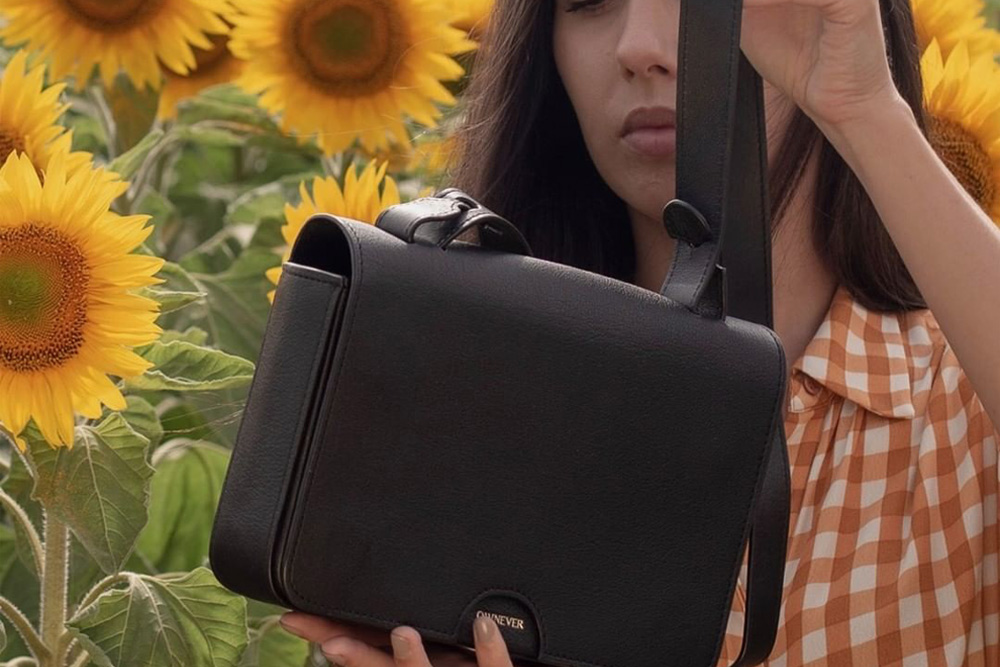
Ownever
Read the point of view of OWNEVER’s CEO Eliana Barros. She shares with us their stand for ethical production using leather design as a canvas for a gender equality statement.
In the industry nowadays, many brands are born of people’s desires to make a difference in the world. This is why Eliana Barros first thought of the ethical, authentic accessory brand OWNEVER.
“It was just a mix of my personal beliefs with my desire of creating something durable that lasted more than myself, that could tell a different story, that was more than just an Instagram picture.”
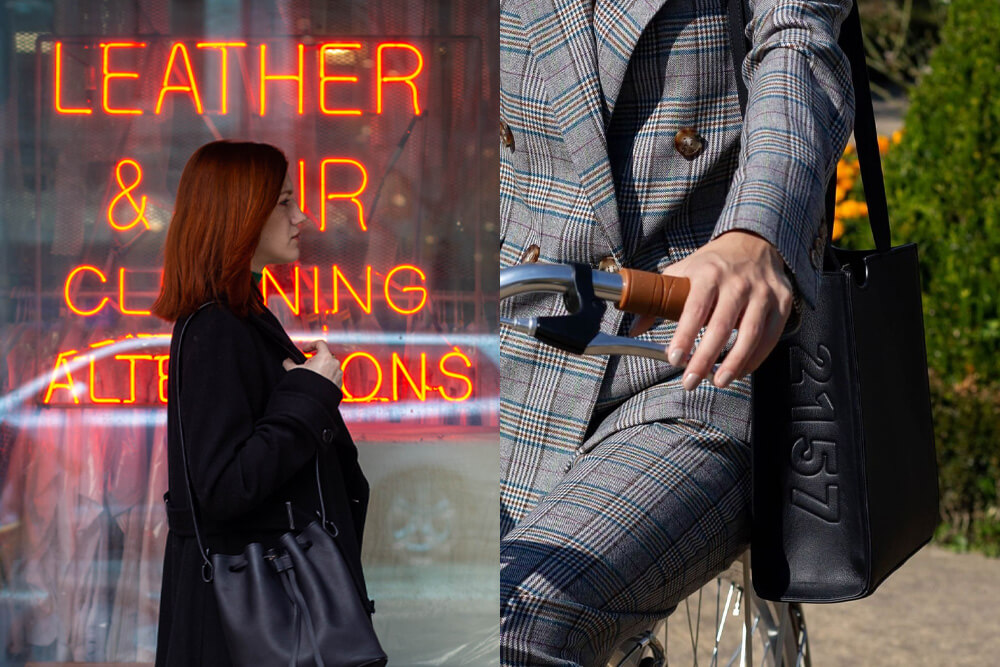
For her, creating timeless products that will last a lifetime is a means not only to make a difference in rampant consumerism but also to work with responsibly sourced raw materials, like leather, for long-lasting pieces.
“I feel that today social media made people greedy for novelties. I understand novelty, but I don’t understand irresponsible gestures.”
We always have a choice, we can buy more, or we can buy better.
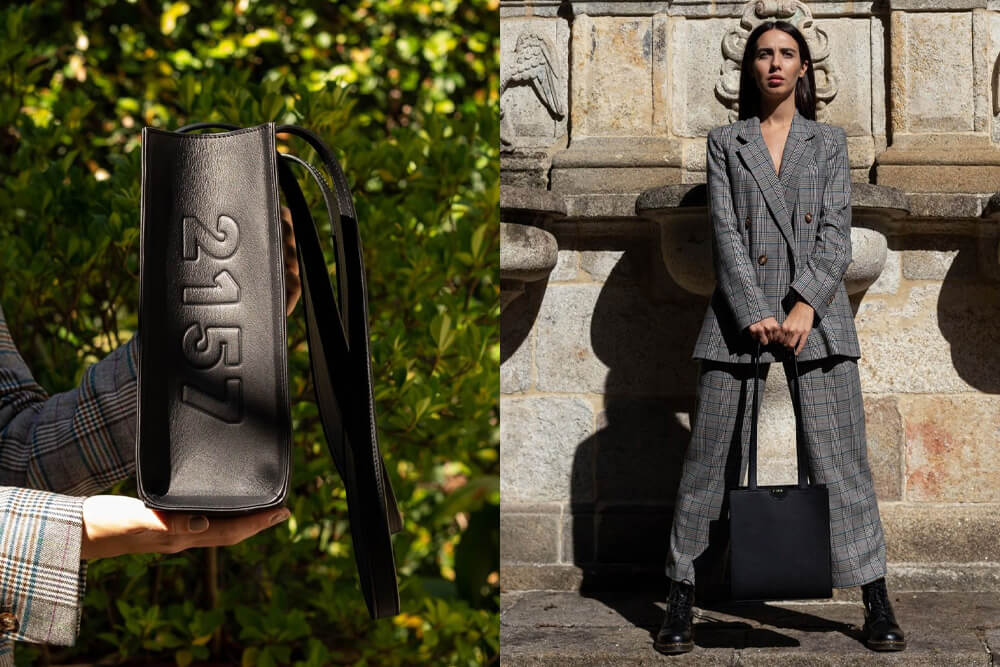
And we all know that is not the quantity that brings us long-term joy. Thinking of a better and more equal future, the designer named the piece 2157, the year when equal pay between men and women will be possible.
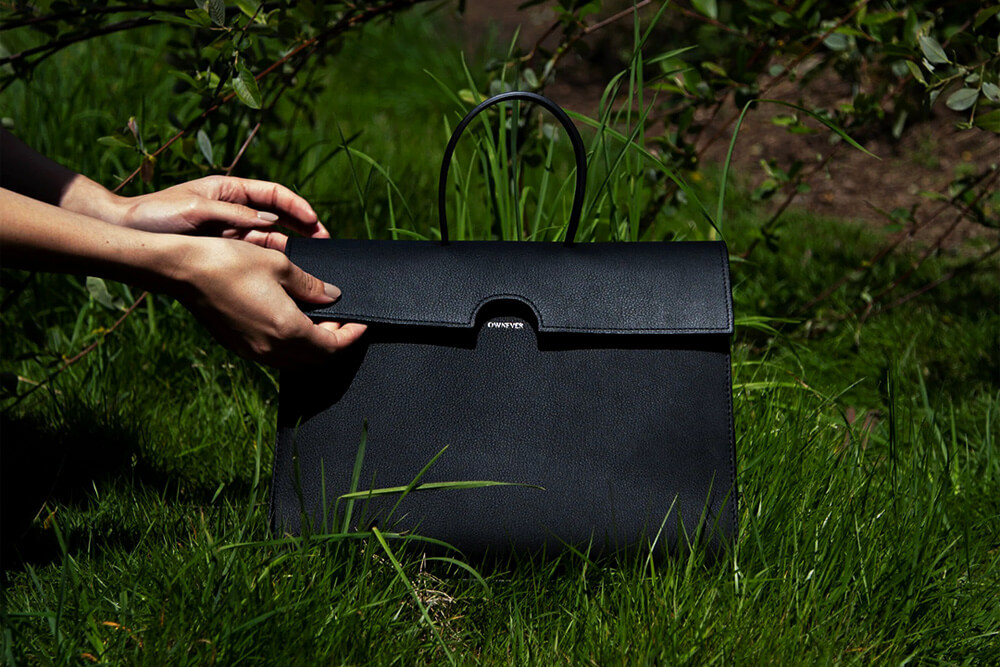
Great materials, the simplicity of the design, and good construction are a big part of 2157 longevity.
“Because our power is the longevity of our handbags, we’ve created this unique edition that will come with a 135-year warranty, free of charge, until we achieve gender equity. We, unfortunately, won’t even be here anymore, but we know 2157 will be passed down for generations to reach the year 2157 as good as new – or even better, as we know leather patina only improves with age. Great materials, the simplicity of the design, and good construction are a big part of 2157 longevity. The other part is that we offer to repair all our handbags, and in this case, it’s free of charge.”
Interview: Helen Kirkum
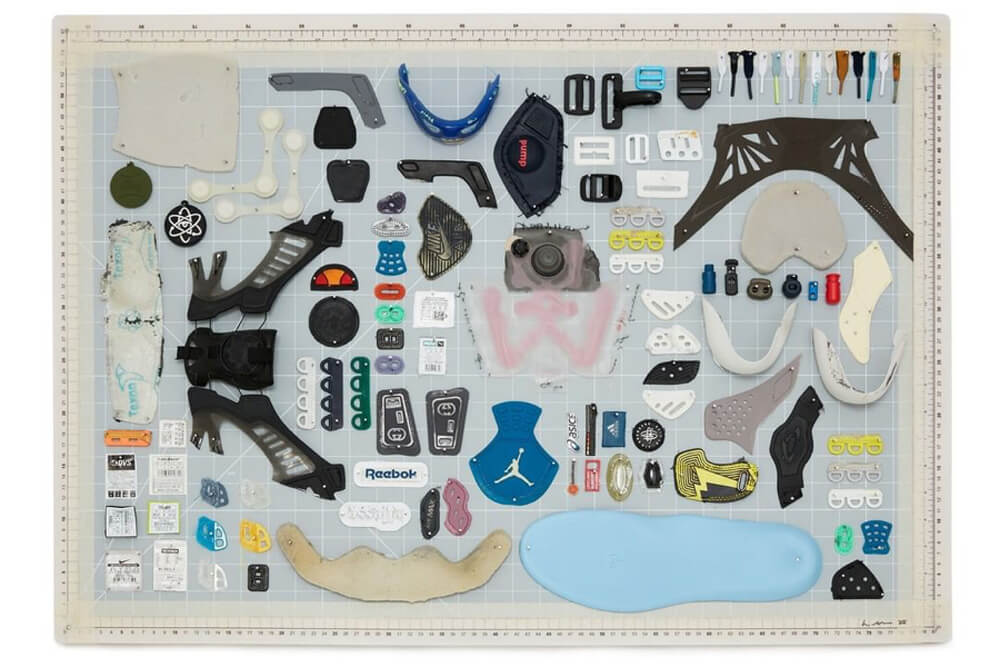
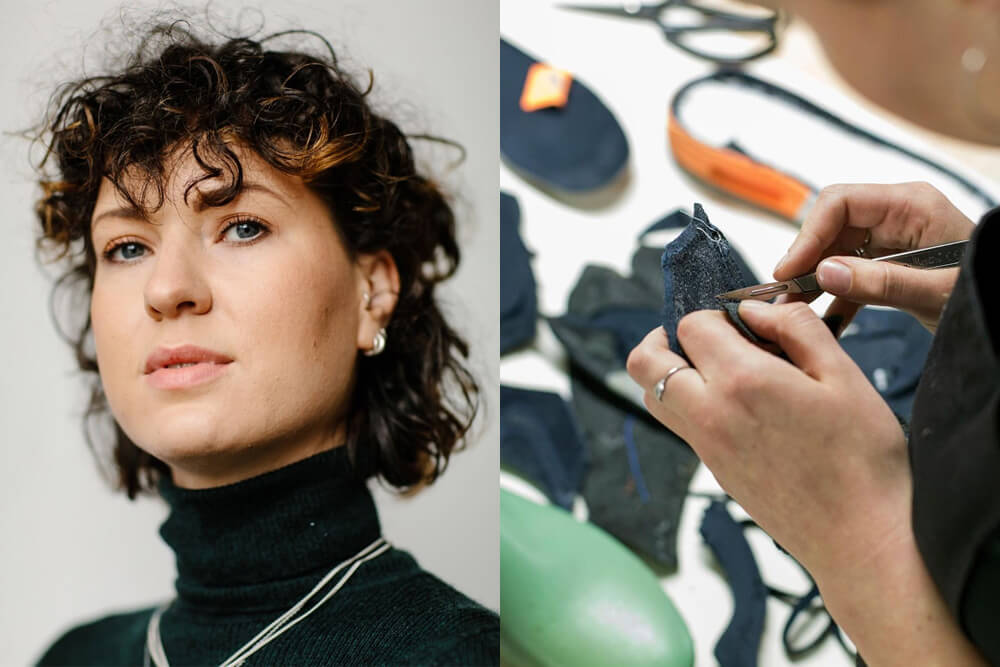
Working with discarded sneakers you get a variety of leathers, suedes, and synthetics to work with, which can be difficult as everything has different thicknesses and stretches.
“Working with discarded sneakers you get a variety of leathers, suedes, and synthetics to work with, which can be difficult as everything has different thicknesses and stretches. Suede also ages a lot more severely, so it can be difficult to rework, but in the end, you get a really beautiful mix of colors, aging, and textures that makes each pair completely unique to each client.”
Since your work stands out in such an ephemeral market, what can you tell about being a pioneer in this kind of upcycling leather craftsmanship?
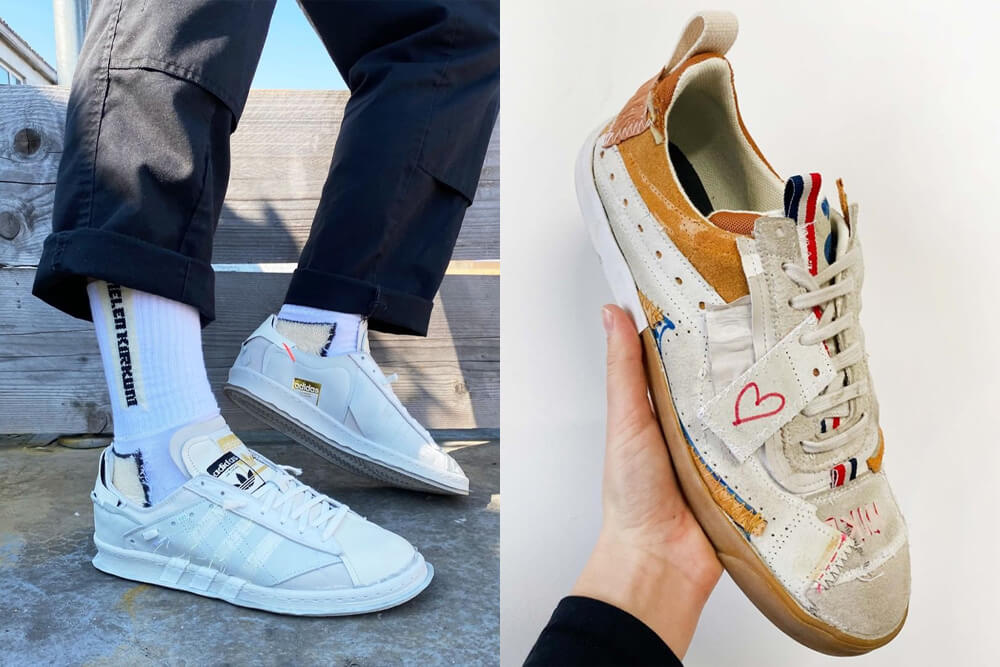
It’s hard. Working with recycled materials always has so many challenges. Sneaker culture is driven by newness. When I first started working with this idea, back in 2015, all sneakers appeared so white and shiny on the shelf and seemed completely devoid of any essence of handmadeness. So, my work pioneering this space has always been about challenging newness, can we create something beautiful, a hype object within the sneaker world that is fabricated from discarded pieces and so obviously celebrating the nuances of the handmade.
Your unique designs tell stories, giving a new purpose to surplus and unusual ideas. What stories have impacted your creative background and what are your main visual references?
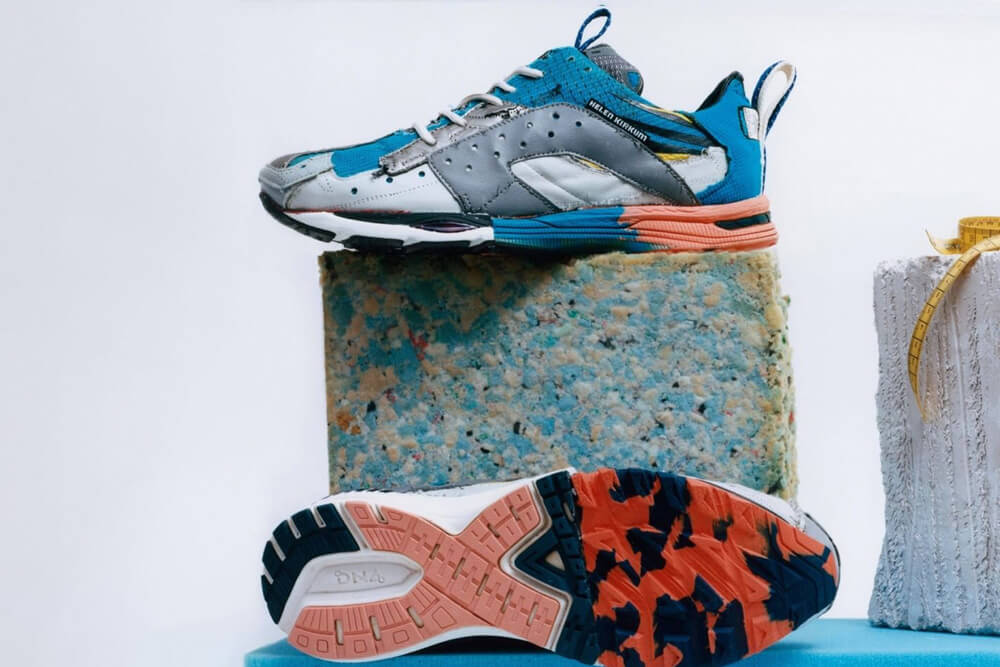
I first stumbled across the idea of using recycled sneakers as a primary material when I was studying my MA at The Royal College of Art. I wanted some old sneakers to cut up to see how they were made, but no one would give me them. I realized then that we all have a personal story connected to our sneakers, even when they are completely falling apart. This realization impacted my practice from then on. How can we cherish the marks on each pair to honor the memories it holds? This is especially true with leather, as it takes on so much character as it ages. The visual references always come from the material. If a client sends me their favorite sneakers, a pair from a special occasion, or maybe their childhood pair that no longer fits them, I use the shapes, lines, and texture to influence how the design plays out. It is a textural collage of their life in those shoes.
How did it all come together resulting in an internationally acclaimed label based on conscious creativity and process-driven craft?
I took it one step at a time I guess, (no pun intended). Through studying traditional footwear at The University of Northampton, I fell in love with repair and craft. Then, exploring sneaker design at RCA, I found our emotional connection to shoes. That led me to search for an alternative material, which ended up being discarded odd sneakers at Traid. My graduate collection in 2016 had an industry-wide impact, showcasing a completely new take on what sneakers could be. All these steps nudged me in this direction and told me not only that my process and ideas were valid, but also that they were necessary and that I can use my creativity as a force of change and good in this world. I always come back to the idea that I am trying to create something we recognize but that we are not used to seeing. We all know what sneakers are, and their impact as signifiers of status, identity, and culture, but we definitely don’t know much about how they are made, what they are made of, or who makes them. So, we thought we’d have a go at changing that.